
The most profitable tourism model isn’t about luxury; it’s about making ecological and cultural regeneration your core, premium product.
- True high-value tourists are defined by their motivations (conservation, learning, connection), not just their budget.
- Replacing superficial ‘green’ gestures with transparent, systemic changes builds the trust required to justify premium pricing.
Recommendation: Identify your destination’s unique “traveler archetype” and build targeted, regenerative experiences they can’t find anywhere else.
For local tourism boards and business owners in fragile natural areas, the central dilemma is a painful one: the very visitors who fuel your economy can also degrade the natural assets that attract them. The conventional wisdom has long been to adopt “eco-friendly” practices—placing signs in bathrooms, installing recycling bins, and marketing your “green” credentials. But in an age of savvy travelers and heightened ecological awareness, these surface-level actions are no longer enough. They are often perceived, correctly, as greenwashing.
The conversation is shifting from a model of simple sustainability, which aims to “do no harm,” to one of regenerative tourism, which actively seeks to heal and improve the ecosystems and communities it touches. This isn’t about adding a cost center to your business; it’s about fundamentally transforming your business model. It’s about understanding that for a new class of high-value traveler, the health of the ecosystem, the authenticity of the culture, and the transparency of your operations are not just features—they are the premium product itself.
This guide moves beyond the platitudes. It provides a strategic blueprint for destination managers and local entrepreneurs to attract discerning tourists who are willing to invest in destinations that invest in themselves. We will explore how to fund conservation through visitor engagement, how to achieve credible certification without breaking the bank, and ultimately, how to identify and cater to the specific travel personalities who will become your most loyal and valuable advocates.
This article provides a detailed roadmap for transforming your tourism strategy from extractive to regenerative. The following sections break down the essential components, offering practical tools and proven models to guide your transition towards a more sustainable and profitable future.
Summary: A Blueprint for Regenerative Tourism
- Why Visitor Fees Are Essential for Maintaining Hiking Trails
- How to Get Green Globe Certified Without a Massive Consulting Budget
- Eco-Lodge vs. Chain Hotel: Which Actually Supports the Local Economy?
- The Towel Reuse Sign That Masks a Lack of Real Energy Policy
- When to Visit Popular Sites to Have Zero Impact on Overcrowding
- Why Greenwashing Scandals Cause a 30% Drop in Long-Term Sales
- How to Transform a Ghost Town into a Thriving Economic Hub
- How to Build a Trip That Perfectly Matches a High-Value Travel Personality
Why Visitor Fees Are Essential for Maintaining Hiking Trails
The surge in outdoor recreation is a double-edged sword. While it brings welcome economic activity, it places immense strain on natural infrastructure. In the US alone, more than 57.8 million hikers participated in the activity in 2023, a number that translates directly into soil erosion, trail damage, and increased need for safety and rescue services. Relying on general tax revenue to cover these specific, escalating costs is unsustainable and unfair. The solution lies in reframing the conversation: a visitor fee is not a penalty but an investment in the quality and longevity of the very experience the visitor seeks.
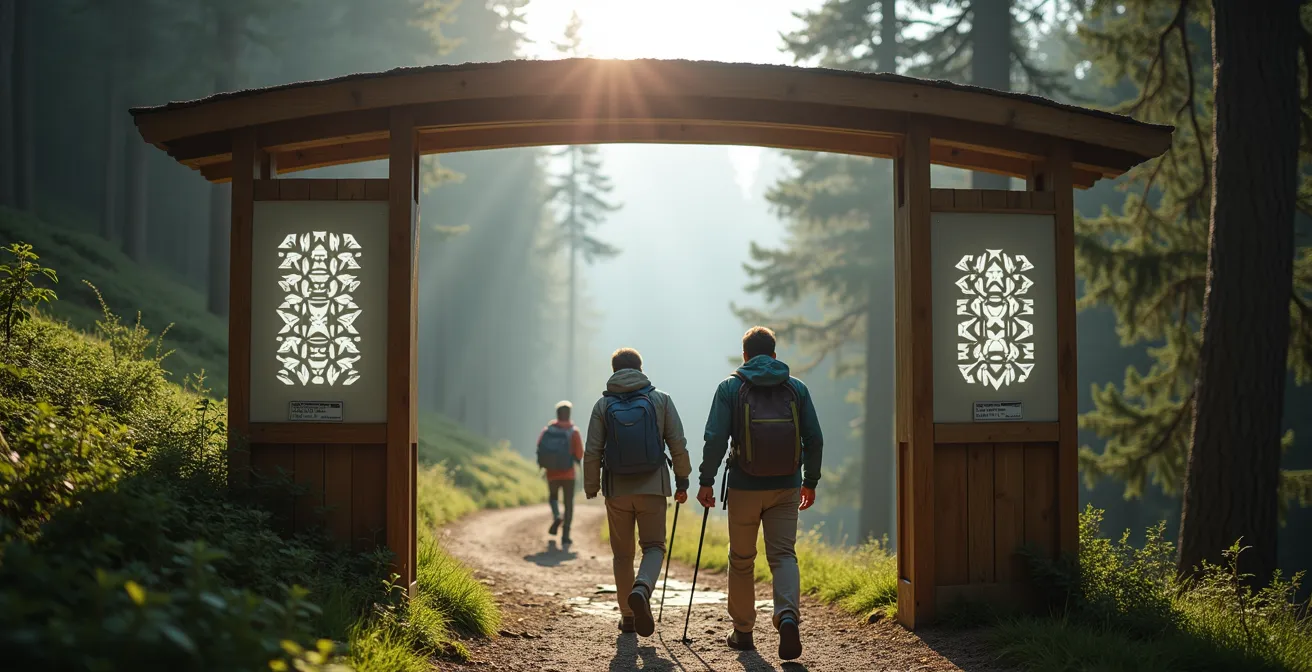
This “user-pays” principle transforms trail maintenance from a cost into a self-sustaining system. As demonstrated by the access fee system at Mount Fuji, these funds can be directly allocated to critical needs: repairing eroding paths, funding staff salaries, maintaining essential facilities like toilets, and enhancing safety measures. Furthermore, Fuji officials have paired the fee with a mandatory online reservation system and a brief safety class, turning the access point into an opportunity for education and crowd management. This model treats the trail not as a free-for-all public good, but as a premium natural asset whose users are also its guardians.
How to Get Green Globe Certified Without a Massive Consulting Budget
For small businesses, the cost of prestigious sustainability certifications like Green Globe can seem prohibitive, creating a barrier to entry that leaves them unable to compete for the eco-conscious traveler. The traditional path involves hiring expensive individual consultants, a process that can take up to a year and cost tens of thousands of dollars. However, a more strategic and collaborative approach can slash these costs while increasing the collective impact: the certification co-op.
The co-op model involves a small group of non-competing local businesses (e.g., a hotel, a restaurant, a tour operator) pooling their resources. By hiring a single consultant to assess all businesses simultaneously, they can achieve economies of scale that are impossible alone. This not only reduces direct financial outlay but also fosters a culture of shared knowledge and creates opportunities for joint sustainability initiatives, such as a unified waste management system or a shared network of local suppliers. This collective action transforms a group of individual businesses into a “certified sustainable district,” a far more powerful marketing proposition.
Your Action Plan: Forming a Certification Co-op
- Identify 3-5 non-competing local businesses in your area interested in sustainability certification.
- Create a formal cooperative agreement outlining shared costs, data sharing protocols, and a joint application strategy.
- Pool resources to hire one consultant who can assess all businesses simultaneously, reducing per-business costs by up to 70%.
- Implement shared sustainability initiatives (e.g., waste management systems, local supplier networks) that benefit all co-op members.
- Apply as a ‘certified sustainable district’ to leverage collective impact and attract eco-conscious travelers to the entire area.
The financial and strategic advantages of this model are undeniable. It transforms a daunting administrative and financial hurdle into a manageable, collaborative project with a higher rate of success and a greater marketing reach for the entire destination.
| Aspect | Individual Certification | Co-op Model |
|---|---|---|
| Consultant Fees | $15,000-25,000 | $3,000-5,000 per business |
| Audit Preparation Time | 6-12 months | 3-6 months |
| Marketing Impact | Single business | Entire destination |
| Success Rate | 65% | 85% |
Eco-Lodge vs. Chain Hotel: Which Actually Supports the Local Economy?
Not all tourism revenue is created equal. A critical metric for any destination manager is “economic leakage”—the percentage of tourist spending that leaves the local economy to pay for imported goods or to return profits to foreign owners. This is where the structural differences between a locally-owned eco-lodge and an international chain hotel become starkly apparent. The choice of accommodation directly impacts whether tourism dollars build local wealth or are siphoned away.
Research into regenerative tourism shows that locally owned and operated eco-lodges can retain as much as 80% of their revenue within the community. This is because their business model is inherently tied to the local supply chain: they source food from local farmers, use materials from local artisans, and hire and train a local workforce. In contrast, large, foreign-owned hotel chains often exhibit a much higher leakage rate, with some studies showing they retain as little as 40% of revenue locally. Their standardized operations often rely on centralized purchasing and international management, minimizing their integration with the surrounding economy.

This distinction is at the heart of a truly regenerative approach. As the team at Nayara Resorts points out in their report on the future of sustainable luxury, the goal is to ensure the benefits are shared equitably.
Regenerative tourism expands sustainable thinking beyond just environmental stewardship, adding an additional focus that the benefits of tourism are shared equitably with local communities.
– Nayara Resorts, The Future of Sustainable Luxury Report
Promoting and incentivizing the development of accommodations that prioritize local sourcing and ownership isn’t just a social good; it’s a powerful economic strategy that creates a more resilient and prosperous destination.
The Towel Reuse Sign That Masks a Lack of Real Energy Policy
The small, laminated sign asking guests to reuse their towels has become the universal symbol of hotel “sustainability.” While water conservation is important, this gesture is often a form of greenwashing—a low-cost, highly visible action that creates a veneer of environmental responsibility while masking a complete lack of substantive investment in energy efficiency. Today’s high-value travelers are increasingly adept at seeing through these token efforts. They demand transparency and tangible proof of a genuine commitment.
A truly sustainable property moves beyond cosmetic changes and invests in the core infrastructure of the building. This requires a systemic approach to energy and resource management. To distinguish authentic commitment from superficial greenwashing, business owners and travelers alike can apply a simple litmus test:
- Public Data Display: Does the property publicly display real-time energy and water consumption data? Transparency is a hallmark of confidence.
- On-Site Renewables: Is there visible evidence of on-site renewable energy generation, such as solar panels, geothermal systems, or wind turbines?
- Staff Knowledge: Can staff provide specific, quantifiable metrics on water usage per guest or waste diversion rates? Vague answers are a red flag.
- Capital Investments: Has the property made substantial investments in building efficiency like heat pumps, full LED lighting retrofits, or smart HVAC systems?
The ultimate goal is to transform sustainability from a back-of-house operational detail into a front-facing guest experience. For example, the Six Senses Zighy Bay resort in Oman doesn’t just use renewable energy; it offers guests tours of its solar farm and displays real-time energy dashboards. This turns infrastructure into an educational attraction, demonstrating a deep commitment that justifies a premium price point and builds unshakable brand loyalty.
When to Visit Popular Sites to Have Zero Impact on Overcrowding
Overtourism doesn’t just diminish the visitor experience; it can cause irreversible damage to fragile ecosystems and cultural sites. The common response is to limit numbers or raise prices, but a more nuanced and effective strategy is to manage visitor flow. This approach is rooted in understanding a site’s “carrying capacity,” a concept that defines the maximum number of visitors an area can sustainably handle without causing degradation.
Carrying capacity is the capacity of tourists or visitors an area can sustainably tolerate over time without damaging the environment or culture of the surrounding area. This can be altered and revised in time and with changing perceptions and values.
– UN World Tourism Organization, Sustainable Tourism Guidelines
Managing for carrying capacity isn’t just about ‘how many’ but also ‘when’. Visitor traffic is rarely distributed evenly throughout the day. Instead, it follows predictable peaks and troughs. By analyzing this pattern, destinations can implement strategies to spread visitors out. Trail usage data analysis reveals that the first and last hours of operation see 70% fewer visitors than peak times between 10 a.m. and 2 p.m. Actively promoting these “shoulder hours” through differential pricing, exclusive early-access tours, or simply better communication can dramatically reduce congestion without turning visitors away. This allows the site to serve a similar total number of visitors while ensuring that at any given moment, the impact remains below its critical carrying capacity.
Why Greenwashing Scandals Cause a 30% Drop in Long-Term Sales
In the digital age, trust is a tangible financial asset, and greenwashing is its kryptonite. When a destination or business is exposed for making false or exaggerated environmental claims, the fallout is swift and severe. It’s not just a fleeting PR problem; it’s a direct hit to the bottom line. According to UN Tourism sustainability reports, destinations embroiled in greenwashing scandals can see a revenue drop of up to 30% that persists for three or more years. This happens because greenwashing doesn’t just disappoint a customer; it shatters the trust that underpins the entire brand promise.
The mechanism for this damage is what can be termed the “Contagion Effect of Negative Social Proof.” In today’s hyper-connected world, an exposé of inauthenticity—a hotel chain claiming “eco-friendly” status while dumping waste, for example—doesn’t stay contained. It spreads across social media platforms like YouTube, Instagram, and travel forums, generating a tidal wave of negative comments, reviews, and user-generated content. This cascade creates overwhelming evidence that the brand is untrustworthy, damaging not only the specific business but also casting a shadow over the credibility of the entire destination.
Once this negative social proof reaches a critical mass, it becomes incredibly difficult to reverse. The destination is no longer seen as a pristine natural paradise but as a place of deception. High-value travelers, who prioritize authenticity, will simply choose to go elsewhere. The 30% revenue drop is a direct measure of this evaporated trust, representing the long-term cost of a short-term marketing lie.
How to Transform a Ghost Town into a Thriving Economic Hub
The revitalization of a declining or abandoned town presents the ultimate regenerative challenge. The conventional approach often involves attracting a single large employer or building generic tourist attractions, which can fail to create a resilient, authentic economy. A regenerative strategy, however, focuses on reviving the town’s unique soul and building a diversified economic base from the ground up. This isn’t about erasing the past, but about making its intangible heritage the core of its future.
A proven, phased approach can guide this transformation:
- Phase 1: Digital Infrastructure Foundation. Before anything else, install high-speed internet. This is the non-negotiable bedrock for a modern economy. Use it to establish co-working spaces and actively recruit a small cohort of digital nomads to create a year-round economic base.
- Phase 2: Resurrect Intangible Heritage. Identify and revive one unique cultural asset—be it a traditional craft, a forgotten culinary tradition, or a historic festival. This becomes the town’s authentic identity, the story that no other place can tell.
- Phase 3: Community-Owned Investment. Structure development through a Community Investment Trust. Mandate that a percentage (e.g., 15%) of all property sales and tourism revenue is funneled into a locally-controlled fund dedicated to ongoing restoration and community projects. This ensures that growth benefits everyone.
- Phase 4: Launch Regenerative Tourism. Invite visitors to be participants, not just spectators. Offer programs where they can actively take part in restoration projects, learn the revived craft, or contribute to ecological monitoring, creating a deep emotional investment.
This model transforms tourism from an extractive industry into a force for healing and revival. As the experts at Earth5R note, this signals a profound shift in what tourism can be.
Regenerative destinations go beyond reducing harm — they restore ecosystems and rebuild communities. The success of these policies signals a deeper transformation where tourism isn’t an extractive industry but a regenerative force, healing the very world it explores.
– Earth5R, Sustainable Tourism: 20 Global Destinations Report
Key Takeaways
- Visitor fees are not a tax but a direct investment in the quality and maintenance of the natural assets tourists come to enjoy.
- Collaboration through co-ops drastically reduces the cost and increases the impact of sustainability certifications, making them accessible to small businesses.
- True sustainability is systemic (energy policy, local supply chains) and transparent, not cosmetic or based on token gestures like towel-reuse signs.
How to Build a Trip That Perfectly Matches a High-Value Travel Personality
The final, most crucial shift in attracting high-value tourists is to stop thinking about them as a single demographic defined by wealth. Instead, view them as a collection of psychographic archetypes defined by their core motivations. A “high-value” traveler is anyone who is willing to pay a premium for an experience that aligns deeply with their personal values. The key to capturing this market is not to offer generic luxury, but to design highly specific, authentic experiences that cater to these distinct travel personalities.
By understanding these archetypes, a destination can move beyond one-size-fits-all marketing and create a portfolio of offerings that resonate on a much deeper level. This framework allows you to identify your authentic strengths and match them to the travelers who will value them most.
| Archetype | Core Motivation | Ideal Experience | Impact Priority |
|---|---|---|---|
| The Steward | Contributing to conservation | Hands-on restoration projects | Environmental regeneration |
| The Scholar | Deep cultural understanding | Expert-led immersive workshops | Knowledge preservation |
| The Connector | Authentic human interaction | Homestays and community dinners | Social bridge-building |
| The Pioneer | Discovering untouched places | Off-grid, low-impact expeditions | Economic distribution |
| The Wellness Seeker | Personal transformation | Retreat-based experiences | Holistic sustainability |
Modern platforms are already facilitating this shift. Worldpackers, for example, allows travelers to filter opportunities based on “eco programs,” connecting them directly with hosts engaged in permaculture, organic farming, or environmental education. This model proves that travelers are actively seeking to exchange their time and money for meaningful, value-aligned experiences. A destination that can clearly articulate its offerings for “The Steward” or “The Scholar” will attract visitors who are not only less price-sensitive but also more respectful and engaged.
Begin by using these traveler archetypes to define your ideal guest. Then, audit every aspect of your operation not by asking “Are we eco-friendly?” but “Are we creating a regenerative experience this specific traveler will value and champion?” This is the most direct path to building a resilient, respected, and sustainably profitable tourism destination.