
The ability to build elite muscle on a vegan diet has nothing to do with finding a “magic” protein source and everything to do with mastering the body’s physiological systems.
- The “incomplete protein” theory is obsolete; hitting the Leucine Threshold per meal is the key trigger for muscle synthesis, which is easily achieved with whole plant foods.
- Performance is dictated by your ability to manage digestive load and optimize nutrient partitioning, not just by what you eat.
Recommendation: Stop chasing protein grams and start implementing a system that optimizes your digestion, nutrient timing, and recovery protocols.
The question of building serious muscle mass on a vegan diet is often met with skepticism, particularly within athletic circles. For years, the conversation has been dominated by fears of “incomplete proteins,” nutrient deficiencies, and an underlying belief that plant-based eating is inherently suboptimal for performance. Many athletes who make the switch simply swap chicken for tofu, increase their food volume, and then struggle with bloating, fatigue, and disappointing results, reinforcing the very myths they sought to disprove.
The conventional advice—eat more beans, find a good protein powder, and hope for the best—misses the point entirely. This approach treats a plant-based diet as a compromised version of an omnivorous one, focusing only on plugging nutritional gaps. But what if this entire framework is flawed? What if the key to unlocking elite performance isn’t about compensating for a lack of animal products, but about mastering a unique set of physiological systems that a whole-foods, plant-based diet is perfectly suited to optimize?
This guide moves beyond the superficial. We will dismantle the outdated science holding athletes back and provide a new blueprint. It’s a system-based approach focused not just on what you eat, but on how your body processes it. We will explore the science of protein synthesis, strategies for digestive efficiency, micronutrient optimization, and even the role of lifestyle stressors in building a resilient, high-performing physique—all without a single scoop of supplemental powder.
For a practical look at how these principles translate into real food, the following video offers a simple recipe demonstration. It’s an example of how to create an energy-dense, satisfying, and completely plant-based meal that fits within a performance-oriented lifestyle.
To help you navigate this comprehensive system, this article is structured to build your knowledge from the ground up. We will begin by addressing the most persistent myth in nutrition and then progressively build out a complete framework for plant-based athletic excellence.
Summary: A Systematic Approach to Plant-Based Muscle Building
- Why the “incomplete protein” theory is outdated science?
- How to switch to plant-based without bloating and digestive issues?
- Whole Foods vs Fortified Products: where to get your iron?
- The B12 risk that develops silently over 3 years
- How to prep high-protein plant lunches for a 50-hour work week?
- Hydroponics vs Traditional Soil: which is more resilient to climate shifts?
- Why your cells need a break from digestion to repair themselves?
- How to strengthen immunity through cold exposure and lifestyle?
Why the “incomplete protein” theory is outdated science?
The single greatest piece of misinformation haunting vegan athletes is the myth of “incomplete” proteins. The old theory suggested you must meticulously combine specific plant foods at every meal (like rice and beans) to form a “complete” amino acid profile. This is not only impractical but, from a modern sports nutrition standpoint, factually incorrect. All plant foods contain all 20 amino acids; the concern has always been about the relative amounts of certain essential ones.
The real key to triggering Muscle Protein Synthesis (MPS)—the process of building new muscle tissue—is not “completeness” but achieving the Leucine Threshold. Leucine is the primary amino acid that acts as a switch to turn on MPS. Research indicates that a dose of approximately 2.5-3g of leucine per meal is required to maximize this anabolic signal. A diet based on a variety of plant-based whole foods, consumed in sufficient quantities to meet caloric needs, easily meets this requirement throughout the day.
Case Study: Elite Rugby Players Thriving on Whole Plant Foods
Skepticism often fades in the face of hard evidence. A 2024 study modeled the diets of professional male rugby players who followed a completely plant-based nutrition plan. It found that a daily protein intake of 1.68 g/kg of body weight, sourced entirely from whole foods, was more than sufficient. This strategy allowed them to meet all requirements for maximal muscle gains and elite athletic performance, consistently achieving 2.9g of leucine per meal across four daily meals. This demonstrates that a well-structured vegan diet is not a compromise but a viable strategy for top-tier strength and power athletes.
The focus, therefore, should shift from the outdated concept of protein combining to a modern strategy of ensuring sufficient total protein intake (1.6-1.8 g/kg of body weight for athletes) and distributing it across 3-4 meals. This approach ensures a steady supply of amino acids and consistently activates the leucine-driven pathways for muscle growth. Leucine-rich plant sources like soybeans, lentils, and hemp seeds are excellent staples, but the goal is total daily intake from a varied diet, not an obsession with a single food or meal.
How to switch to plant-based without bloating and digestive issues?
For many athletes new to a plant-based diet, the first and most immediate challenge isn’t protein—it’s digestion. A sudden and dramatic increase in fiber from whole grains, legumes, and vegetables can lead to bloating, gas, and discomfort, often referred to as high digestive load. This isn’t a sign that the diet is wrong for you; it’s a sign that your gut microbiome needs time and a strategy to adapt. Managing this transition is a critical performance variable.
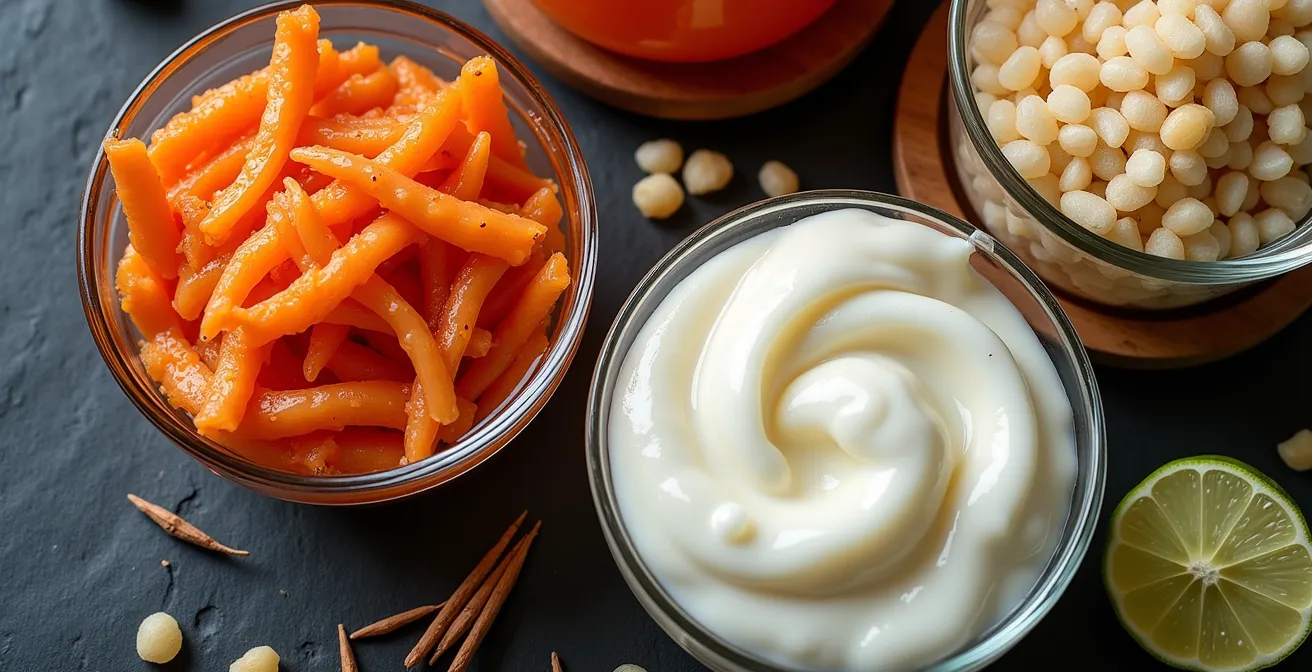
The key is a gradual increase in fiber intake while simultaneously supporting gut health. Introducing fermented foods like kimchi, tempeh, sauerkraut, and kombucha can inoculate your gut with beneficial bacteria, improving its ability to break down complex fibers. Additionally, properly preparing legumes by soaking and sprouting them can significantly reduce anti-nutrients like phytates, making them easier to digest and their minerals more bioavailable.
For an athlete, fiber intake should be strategically periodized around training, just like carbohydrates or protein. Consuming a massive, fiber-rich meal an hour before an intense workout is a recipe for disaster. Instead, you need a smarter approach that matches fiber intake to your daily demands.
The following table outlines a strategic framework for managing fiber intake, ensuring your digestive system supports, rather than hinders, your performance.
| Training Day | Fiber Target | Timing Strategy | Food Examples |
|---|---|---|---|
| Heavy Training | 20-25g | Lower fiber 3-4 hours pre-workout | White rice, peeled potatoes, tofu |
| Light Training | 30-35g | Moderate throughout day | Quinoa, sprouted lentils, tempeh |
| Rest Day | 40-45g | Highest intake for gut adaptation | Beans, whole grains, vegetables |
Whole Foods vs Fortified Products: where to get your iron?
Iron is a crucial micronutrient for athletes, playing a central role in oxygen transport via hemoglobin and energy production within muscle cells. A common concern is that the non-heme iron found in plants is less bioavailable than the heme iron from animal sources. While true to a degree, this perspective is incomplete and overlooks the powerful strategies available to dramatically enhance plant-based iron absorption.
The debate between relying on whole foods versus fortified products (like cereals and plant milks) is a matter of strategy. Fortified foods offer a convenient, measurable dose of iron, which can be useful. However, a well-planned whole-food diet can be more than sufficient and provides a synergistic matrix of other beneficial compounds. The master key to unlocking plant-based iron is Vitamin C. Consuming an iron-rich food source alongside a Vitamin C source in the same meal can result in an up to 300% increase in non-heme iron absorption, effectively closing the bioavailability gap.
This means simple pairings like lentils with bell peppers, a spinach salad with a lemon-based dressing, or oatmeal with strawberries are not just delicious—they are strategic nutritional synergies. Conversely, it’s equally important to be aware of absorption inhibitors. Compounds like tannins (in tea and coffee) and high doses of calcium (often from supplements) can significantly reduce iron uptake. Timing is everything: enjoy your coffee or tea at least an hour apart from your iron-rich meals.
Iron Absorption Matrix: Your Meal Planning Checklist
- Pair iron-rich foods with vitamin C sources: lentils + bell peppers, spinach + lemon juice.
- Avoid tea and coffee within 1 hour of iron-rich meals, as tannins can reduce absorption by 60%.
- Cook acidic foods like tomato sauce in cast-iron cookware to naturally add 2-5mg of iron per serving.
- Separate calcium supplements from iron-rich meals by at least 2 hours to prevent absorption interference.
- Soak and sprout legumes and grains to reduce phytates, which can increase iron bioavailability by up to 50%.
The B12 risk that develops silently over 3 years
While most nutrients can be obtained from a well-planned vegan diet, Vitamin B12 is the non-negotiable exception. It is not produced by plants or animals but by bacteria. In modern, sanitized food systems, the only reliable vegan sources are fortified foods or a direct supplement. For an athlete, ignoring B12 is a critical, performance-ending mistake that can develop insidiously over time.
The body can store B12 for up to three years, meaning a deficiency can develop silently without any immediate symptoms. When symptoms do appear, they are devastating for an athlete. They go far beyond general fatigue and can manifest as neurological issues that directly impair performance. As a sports nutritionist, this is the one area where I insist on supplementation without exception, as the risks of relying on fortified foods alone are too high for a serious athlete whose intake can vary.
The stakes are high because a deficiency strikes at the very core of athletic ability. As leading researchers in the field note, the consequences are directly tied to the mechanisms of performance.
Vitamin B12 deficiency impairs energy production via the Krebs cycle and can lead to peripheral neuropathy, decreased proprioception, and persistent fatigue that could easily be mistaken for overtraining in athletes.
– Ali Niklewicz et al., Nutrition Bulletin – Systematic Review of B12 Status in Vegans
Decreased proprioception means a reduced sense of your body’s position in space, impacting balance, coordination, and technique. The persistent fatigue from impaired energy metabolism is not the kind that a rest day can fix. For any athlete committed to a plant-based diet, a consistent and reliable source of B12 (typically via a sublingual spray or cyanocobalamin/methylcobalamin pill) is not just a recommendation; it is a fundamental requirement for health, safety, and performance.
How to prep high-protein plant lunches for a 50-hour work week?
Theory is one thing; execution is another. For a busy athlete juggling a demanding job, the biggest barrier to nutritional consistency is often time. The solution is not to find more hours in the day, but to adopt a more efficient system. Forget complex recipes; the key to sustainable high-protein plant-based eating is a Component Prep System.
Instead of making five different meals for the week, you batch-prepare individual components—protein bases, grain bases, sauces, and chopped vegetables—and store them separately. This allows you to assemble a fresh, varied, high-protein lunch in under five minutes each day, preventing flavor fatigue and soggy salads. A layered mason jar is a perfect vessel for this system, keeping greens crisp by separating them from the dressing and heavier ingredients until you’re ready to eat.
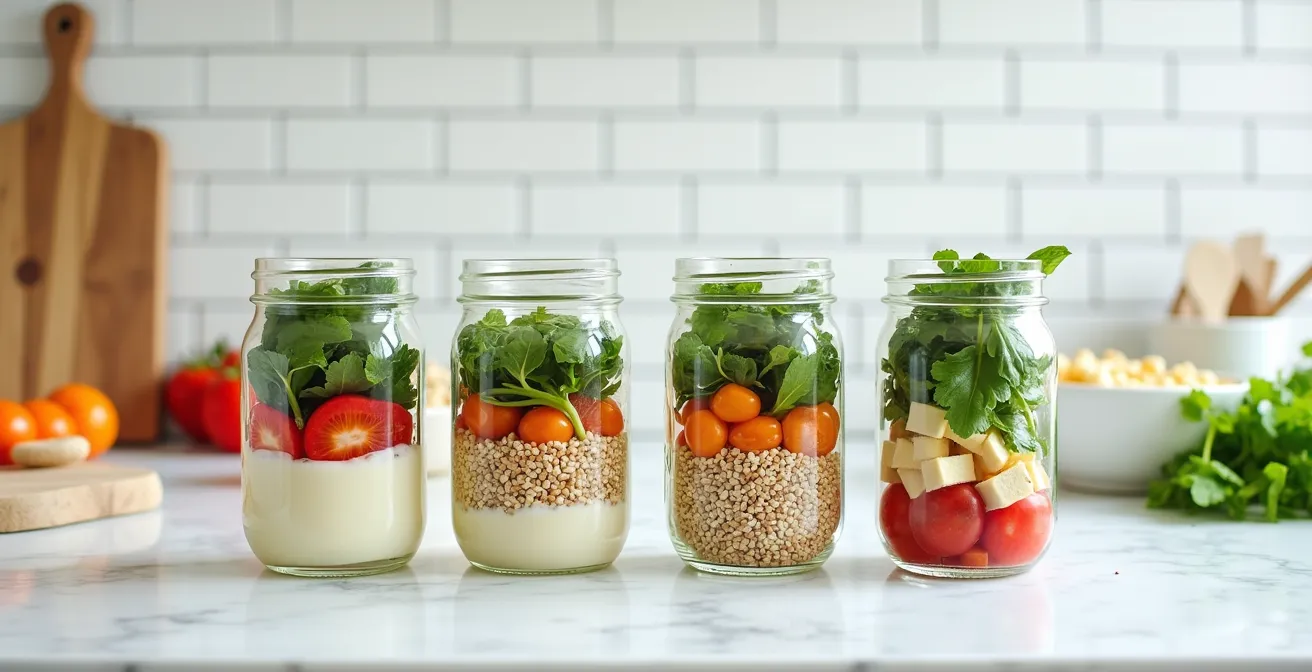
This method provides both structure and flexibility. By having 3 protein options, 2 grain options, and 3 sauces ready to go, you can create dozens of different combinations throughout the month. This approach is built for the high demands of an athlete’s schedule, ensuring that your most important midday meal is always locked in, protein-rich, and ready when you are.
Action Plan: The Component Prep System
- On Sunday, batch cook 3 protein bases: baked tempeh (40g protein/serving), cooked chickpeas (30g/serving), and marinated tofu (35g/serving).
- Prepare 2 grain bases: cook a large batch of quinoa (8g protein/cup) and farro (7g protein/cup) and store them in separate airtight containers.
- Create 3 high-calorie, nutrient-dense sauces: a tahini-herb dressing, a cashew-nutritional yeast “cheese” sauce, and a spicy peanut sauce.
- Pre-chop hardy vegetables that will last 5 days in the fridge: carrots, red cabbage, and bell peppers.
- Each day, take 5 minutes to assemble your meal: layer 1 protein, 1 grain, vegetables, and 1 sauce in a jar or container for a powerful, performance-fueling lunch.
Hydroponics vs Traditional Soil: which is more resilient to climate shifts?
For the truly dedicated athlete, optimizing performance extends beyond the kitchen to the very source of their food. As climate change introduces more volatility into agriculture, the nutrient density of soil-grown produce can fluctuate significantly based on season, soil health, and environmental stressors. This creates a hidden variable in an athlete’s nutrition plan. An advanced strategy to control this variable is sourcing produce from controlled-environment agriculture, such as hydroponics.
Hydroponic systems grow plants in a nutrient-rich water solution without soil. This allows for precise control over the mineral and nutrient content the plant receives, leading to a far more consistent product year-round. For an athlete relying on specific phytonutrients for recovery and anti-inflammatory benefits, this consistency can be a significant advantage. While a “shop local” approach with soil-based farming has its own ecological benefits, a hydroponic source can offer a level of nutritional predictability that is difficult to match.
This isn’t to say one is universally “better,” but to highlight that food sourcing is another system that can be optimized for peak performance. The choice depends on an athlete’s goals: maximizing nutrient consistency or prioritizing other ecological factors.
A recent analysis highlights the quantifiable difference in nutrient stability between these two growing methods, a factor that can directly impact an athlete’s recovery.
| Growing Method | Nutrient Variability | Year-Round Availability | Recovery Impact |
|---|---|---|---|
| Hydroponic | ±5% variation | Consistent 12 months | Predictable anti-inflammatory compounds |
| Soil-based | ±25% seasonal variation | Limited by climate | Variable phytonutrient levels |
Why your cells need a break from digestion to repair themselves?
The modern “bodybuilding” ethos often promotes eating every 2-3 hours to stay “anabolic.” However, emerging science suggests this may be counterproductive. Constant digestion places a significant metabolic burden on the body, diverting resources away from crucial cellular repair processes. For a plant-based athlete consuming a high volume of food, strategically timed breaks from eating are essential for optimizing nutrient partitioning—the process of directing nutrients toward muscle growth and repair rather than fat storage.
Implementing a time-restricted eating (TRE) protocol, such as a 16:8 fast (16 hours of fasting with an 8-hour eating window), can have profound benefits. This period of digestive rest allows the body to activate pathways like autophagy, where cells clean out damaged components. Furthermore, research on nutrient partitioning shows that a 16:8 fasting protocol increases insulin sensitivity by 25% in athletes. Higher insulin sensitivity means your body is more efficient at shuttling glucose and amino acids into muscle cells post-workout, enhancing recovery and growth.
This doesn’t contradict the need for adequate protein; it simply reframes the timing. The idea that you are constantly at risk of muscle breakdown is overstated. As Dr. Donald K. Layman, a leading protein researcher, explains, the anabolic response to a meal is finite.
The duration of the muscle protein synthesis anabolic response ranges from 2 to 2.5 hours after a meal, creating natural oscillating anabolic and catabolic periods that, when properly timed, enhance overall muscle protein turnover and cellular cleanup.
– Dr. Donald K. Layman, Frontiers in Nutrition – Impacts of protein quantity and distribution
By consolidating meals into a strategic window, you give your cells the break they need to repair, improve insulin sensitivity, and make better use of the high-quality nutrients you provide during your eating period. This is the essence of mastering the system of cellular repair and energy management.
Key Takeaways
- Muscle growth is triggered by hitting the leucine threshold (~3g/meal), not by “complete” proteins.
- Managing digestive load with strategic fiber timing and fermented foods is crucial for consistency.
- A reliable B12 supplement is non-negotiable for long-term health and athletic performance.
How to strengthen immunity through cold exposure and lifestyle?
A perfect nutrition plan is useless if you’re too sick or run down to train consistently. Building a truly resilient physique requires a system that extends beyond diet to include lifestyle practices that strengthen your immune system and accelerate recovery. One of the most potent tools for this is hormesis—the principle that small, controlled doses of stress can trigger an adaptive response that makes the body stronger. Cold exposure is a prime example of a hormetic stressor.
Regularly exposing your body to cold, such as through cold showers or ice baths, triggers a cascade of beneficial physiological adaptations. It stimulates the release of norepinephrine, which can reduce inflammation from training. It improves mitochondrial function, enhancing cellular energy production. And it fortifies the immune system, making you less susceptible to the illnesses that can derail a training block. However, timing is critical. Cold exposure immediately after a strength workout can blunt the inflammatory signals necessary for muscle adaptation. The optimal strategy is to time your cold showers or plunges several hours after training or on rest days.
This practice should be part of a holistic recovery system. Combining it with focused breathing exercises can amplify the benefits by toning the nervous system, while pairing it with anti-inflammatory foods like turmeric and ginger post-exposure provides your body with the building blocks to capitalize on the adaptive signal. This transforms a simple cold shower from an uncomfortable chore into a precise tool for building systemic resilience, ensuring you can show up for every training session, ready to perform.
Ultimately, building muscle as a vegan athlete is not about restriction; it’s about precision. By moving beyond outdated myths and embracing a systems-based approach that integrates nutrition, digestive health, and recovery protocols, you can build a powerful, resilient physique and achieve your highest level of athletic performance.