
Extending dive time isn’t about magical breathing techniques, but mastering the physics of your gear and the physiology of your own body.
- Efficient air consumption is a direct result of minimizing physical effort, cognitive load, and physiological stress.
- Mastering buoyancy through breath control is more critical than any finning technique for reducing your Surface Air Consumption (SAC) rate.
Recommendation: Shift your focus from simply ‘breathing less’ to actively controlling the mechanical and biological systems that drive your air use, starting with your breathing pattern and its effect on your heart rate.
For many certified divers, the dive ends not when the sights run out, but when the pressure gauge dictates. Being the first in the buddy pair to signal “thumb up” due to low air can be a recurring frustration. The common advice echoes across dive boats and forums: “relax,” “breathe slowly,” “streamline your gear.” While not incorrect, this advice scratches the surface, treating the symptoms of high air consumption rather than the root causes.
The truth is that significantly extending your bottom time—adding a consistent 15 minutes or more—is not an art. It is a science. It demands a shift in perspective from vaguely trying to “conserve air” to precisely managing the interconnected systems of physics and physiology. It’s about understanding why a slow exhalation calms you down, how your gear configuration creates drag, and why mental load is just as taxing on your air supply as physical exertion. This isn’t about learning to skip-breathe or compromising safety; it’s about becoming a more efficient, and therefore safer, underwater operator.
This guide deconstructs the problem, moving beyond the platitudes to give you a technical master’s understanding. We will explore the concrete physiological mechanisms and physical principles that govern your air consumption. By the end, you will have a framework to turn unconscious processes into conscious, controllable variables, fundamentally changing your relationship with your air supply.
Summary: How to Manage Air Consumption to Extend Dive Time by 15 Minutes?
- Why ignoring safety stops increases DCS risk by 40%?
- Why slow exhalation physically forces your heart rate down?
- How to hover motionless underwater to protect marine life?
- Wrist computer vs Console: which offers better data readability in low light?
- The regulator removal mistake that triggers panic in 10 seconds
- Full-face vs Traditional Mask: which is safer for CO2 buildup?
- When to fly after diving: the 24-hour rule explained
- How to harness the sea’s elements for physical recovery?
Why Ignoring Safety Stops Increases DCS Risk by 40%?
The conversation about air management must begin with its most critical consequence: safety. While the “40% increased risk” is a stark reminder, the real issue for a diver with high air consumption is not a willful decision to skip a safety stop, but the physical inability to complete it. Your air supply is your lifeline, and a poor Surface Air Consumption (SAC) rate directly erodes your safety margins, particularly at the end of a dive when nitrogen loading is at its peak. The palier de sécurité is a non-negotiable part of off-gassing, allowing dissolved nitrogen to safely exit your tissues. Arriving at 5 meters with insufficient air for a 3-5 minute stop forces a dangerous choice.
This isn’t a hypothetical problem. Consider a diver with a high SAC rate of 25 L/min. On a 20-meter dive, their bottom time is drastically reduced. More importantly, the 125 liters of air required for a standard 5-minute safety stop represents a significant portion of their remaining supply. A diver with a more controlled SAC rate of 15 L/min not only gets more bottom time but requires only 75 liters for the same stop, providing a much larger buffer for unforeseen circumstances. High air consumption is a direct threat to your ability to execute the most fundamental safety protocol in recreational diving. Every other technique to improve air use is ultimately in service of this primary goal: ensuring you always have more than enough air to finish the dive safely.
Why Slow Exhalation Physically Forces Your Heart Rate Down?
The advice to “breathe slowly and relax” is ubiquitous but ineffective without understanding the underlying physiology. The key is not just slowing your breath, but specifically extending your exhalation. This action directly stimulates the vagus nerve, a primary component of your parasympathetic nervous system—the body’s “rest and digest” network. When you deliberately exhale for longer than you inhale, you increase what is known as vagal tone, sending a powerful signal to your brain to slow your heart rate and lower your blood pressure. This is not a psychological trick; it’s a physical lever.
An agitated state, characterized by a rapid heart rate and shallow breathing, is a primary driver of high air consumption. By taking conscious control of your exhalation, you can directly counteract this state. The goal is to break the feedback loop where anxiety leads to rapid breathing, which increases CO2, which in turn triggers an even stronger urge to breathe. A simple, controlled exhalation pattern can preemptively dismantle this entire panic-inducing cascade. It is the most fundamental skill for air management because it addresses the root physiological driver of over-breathing.
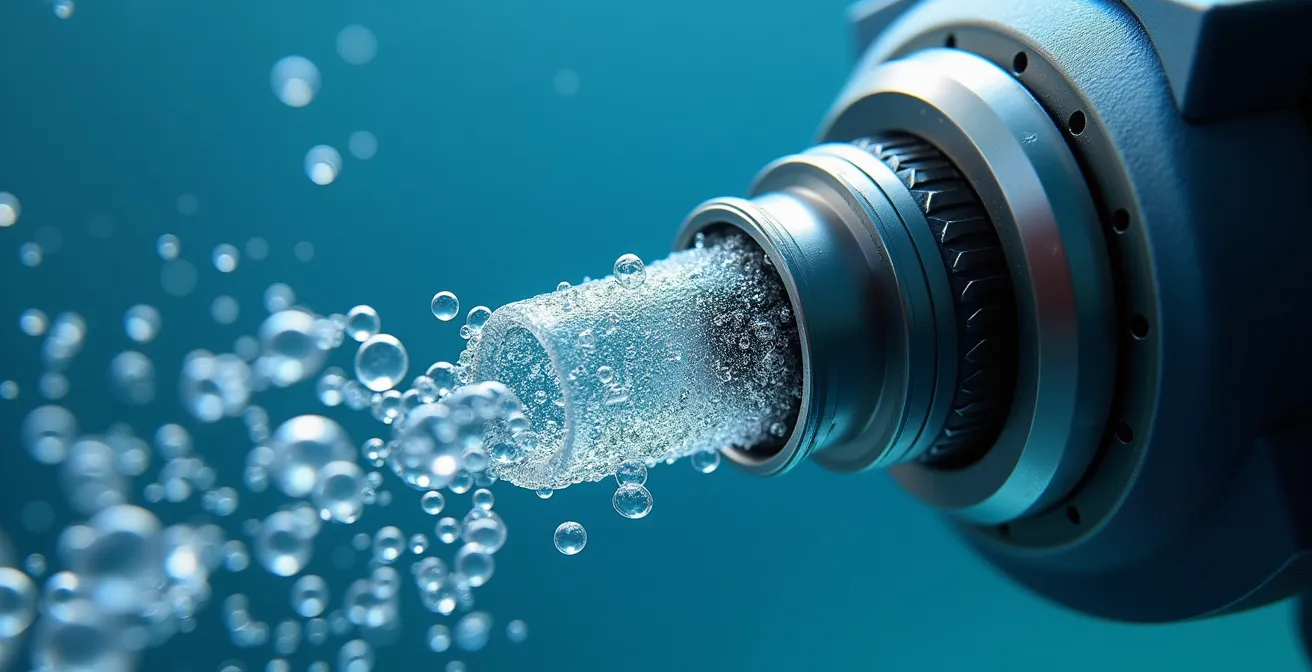
This macro view of bubbles leaving a regulator isn’t just about the equipment; it’s a visualization of control. Each bubble represents a conscious decision, a steady and controlled release of air that dictates your body’s entire physiological state. Mastering this release is the first step to mastering your air supply.
Case Study: The 4-2-6 Breathing Pattern for Vagal Stimulation
A proven technique to practice this control is the “4-2-6” pattern. As detailed in diving instruction, you start by inhaling slowly for a count of 4, feeling your diaphragm expand. After a brief hold for a count of 2, you exhale even more slowly for a count of 6. This extended 6-second exhale is the critical phase that actively engages the parasympathetic nervous system. Practicing this on land and then implementing it during descents or safety stops can produce an immediate and measurable reduction in heart rate and, consequently, air consumption.
How to Hover Motionless Underwater to Protect Marine Life?
Once you have foundational control over your breathing, the next step is applying it to the physics of diving. The single greatest consumer of air, after physiological stress, is unnecessary movement. Every fin kick, every sculling hand motion, and every puff of air into your Buoyancy Control Device (BCD) is work. And work requires oxygen. The ultimate goal is to achieve neutral buoyancy where you can hover, perfectly motionless and in horizontal trim, using only your breath for micro-adjustments. This is the hallmark of an advanced diver and the key to minimal air consumption.
Achieving this state of “zen hovering” is a mechanical process. It begins with being perfectly weighted—a check you should perform at the start of a trip with a near-empty tank. From there, it’s about finding the neutral inflation point in your BCD where you neither sink nor rise. At this point, your lungs become your primary buoyancy compensator. A slow, deep inhalation of 3-4 seconds should cause you to rise gently; a long, slow exhalation of 4-6 seconds should cause you to sink. This is the essence of buoyancy mechanics: using the 1-2 liters of air in your lungs to fine-tune your position in the water column without ever touching your inflator button. This mastery eliminates the constant, air-wasting cycle of kicking to stay up, then deflating, then sinking too far, then kicking again.

As this diver demonstrates, perfect hovering is about stillness. It’s about maintaining a protective distance from fragile marine ecosystems not through frantic finning, but through absolute control. This stillness is the physical manifestation of peak air efficiency, where every breath serves a dual purpose: life support and precise altitude control.
Wrist Computer vs Console: Which Offers Better Data Readability in Low Light?
Optimizing your gear is not just about reducing physical drag; it’s about reducing cognitive load. Every mental micro-process you perform underwater—locating a gauge, interpreting data, making a decision—consumes energy and, by extension, air. The debate between a wrist-mounted computer and a traditional console is a perfect example of how equipment choice directly impacts your mental workload and, therefore, your SAC rate. A wrist computer, with its always-on, backlit display, offers glanceable information. A quick flick of the wrist provides your depth, no-deco time, and gas pressure without breaking trim or initiating a search for a dangling console.
In low-light or low-visibility situations, this advantage is magnified. Fumbling for a console, trying to illuminate a glow-in-the-dark gauge with a torch, and then re-stowing it increases both physical effort and mental stress. The wrist computer’s backlit screen provides instant, clear data, reducing anxiety and allowing you to remain focused on the dive. Furthermore, a streamlined configuration with no dangling console reduces hydrodynamic drag. As experts Barry & Ruth Guimbellot emphasize in Dive Training Magazine, divers must ” secure dangling gear for a streamlined equipment package.” Less drag means less effort to propel yourself through the water, resulting in a direct and measurable reduction in air consumption.
| Feature | Wrist Computer | Console |
|---|---|---|
| Accessibility | Always visible on wrist | Requires retrieval, can dangle |
| Cognitive Load | Low – glanceable data | Higher – must locate and handle |
| Low Light Reading | Backlit display (superior) | Glow-in-the-dark gauge (inferior) |
| Streamlining | Excellent – no drag | Poor – creates drag if not secured |
The Regulator Removal Mistake That Triggers Panic in 10 Seconds
A diver’s relationship with their air supply is most tested during a perceived emergency. The sudden removal of a regulator—whether accidental or during a drill—can trigger an immediate, primal panic response. The physiological urge to breathe is driven by CO2 buildup, not a lack of oxygen. When you stop exhaling, CO2 levels in your blood skyrocket, and your brain’s respiratory center sounds the alarm. It’s been shown that this can lead to a full-blown panic response in as little as 10 seconds if not managed with technique.
The critical mistake is holding your breath. The correct, counter-intuitive action is to exhale a tiny, continuous stream of bubbles the entire time the regulator is out of your mouth. This simple act prevents a laryngeal spasm and, more importantly, continues to expel CO2, keeping the panic signal at bay. The second part of the technique is a calm, methodical recovery. The “sweep method”—leaning to the right and sweeping your right arm back in a wide arc—is a near-foolproof way to locate the hose without looking. Practicing this skill until it becomes muscle memory is a form of stress inoculation. It transforms a potential panic moment into a controlled, manageable problem.

This image captures the grace of a well-rehearsed technique. The smooth, sweeping motion is the antithesis of a panicked grab. By training your body to respond with this calm procedure, you are fundamentally rewiring your brain’s reaction to stress. This ability to remain calm and methodical under pressure is a skill that directly translates to better air consumption on every single dive, even when nothing goes wrong.
Full-Face vs Traditional Mask: Which is Safer for CO2 Buildup?
The choice between a full-face mask (FFM) and a traditional mask and regulator setup has significant implications for respiratory physiology and air consumption. The primary factor is respiratory dead space—the volume of air within the mask that is re-breathed with each cycle. As equipment studies demonstrate, full-face masks can have 250-350ml of dead air space, compared to just 100-150ml for a standard low-volume mask. This larger volume means that with each breath, you are re-inhaling a higher concentration of carbon dioxide.
Your body’s primary trigger to breathe is rising CO2 levels. Therefore, a higher level of CO2 from re-breathed air will naturally increase your respiratory rate, and thus your air consumption. While FFMs offer benefits like the ability to breathe through the nose and added thermal protection, they inherently increase the work of breathing (WOB) and the risk of hypercapnia (excessive CO2) if not perfectly fitted and ventilated. A traditional mask, by isolating the nose and minimizing internal volume, creates a much more efficient gas exchange system. For the specific goal of optimizing air consumption, the lower dead air space of a traditional, low-volume mask is physiologically superior.
| Factor | Full-Face Mask (FFM) | Traditional Mask |
|---|---|---|
| Dead Air Space | High (250-350ml) | Low (100-150ml) |
| CO2 Accumulation Risk | Higher | Lower |
| Work of Breathing (WOB) | Potentially Higher | Lower |
| Impact on SAC Rate | Variable, can increase | Baseline/Optimal |
When to Fly After Diving: The 24-Hour Rule Explained
There is a common misconception among divers that becoming more air-efficient allows for shorter pre-flight surface intervals. The opposite is true. Mastering your air consumption, which leads to longer bottom times, actually increases your responsibility for conservative dive planning. The 24-hour no-fly rule, recommended by organizations like the Divers Alert Network (DAN), is based on the time it takes for your body to off-gas residual nitrogen accumulated during a dive. The more time you spend at depth, the more nitrogen your body tissues absorb.
A diver with an excellent SAC rate might spend 60 minutes at a depth where a less efficient diver only spends 45. While they both surface with adequate air, the more efficient diver has a significantly higher nitrogen load and is therefore at a greater theoretical risk of Decompression Sickness (DCS) if they ascend to altitude too soon. Your dive computer tracks this, but the principle is what matters: efficiency means longer exposure. Therefore, divers who maximize their bottom time must be especially vigilant about adhering to, and sometimes even extending, the standard 24-hour no-fly guideline. The benefit of a long dive is earned through skill, but it comes with the added responsibility of a patient and safe return to the surface world.
This principle extends to planning for any emergency. A large air reserve isn’t just for you; it’s a critical safety resource for your buddy. As DAN points out, this reserve might be needed for anything from sharing gas with a buddy to dealing with an entanglement, situations that extend your time underwater and your nitrogen loading unexpectedly.
Key Takeaways
- Air consumption is a direct reflection of physical effort, physiological stress, and cognitive load—all of which are controllable.
- Mastering buoyancy through breath control is the single most effective way to reduce effort and, therefore, air use.
- Extended exhalation is a physiological tool to manually activate your parasympathetic nervous system, forcing a lower heart rate and a state of calm.
How to Harness the Sea’s Elements for Physical Recovery?
The quest for better air consumption doesn’t end when you surface. Your performance on your next dive is directly influenced by how you recover from the last one. Diving is a physically demanding activity that stresses the body through pressure, thermal load, and muscular exertion. A holistic approach to air management must therefore include a robust post-dive recovery protocol. This isn’t about luxury; it’s about preparing your physiological systems to operate at peak efficiency the next time you are underwater.
As experts like Ashley Parkinson note, overall fitness is a cornerstone of efficient breathing. ” Cardiovascular activities such as running, cycling and swimming strengthen the heart, and also make you a more efficient breather,” she states. A strong cardiovascular system is better at oxygen transport and CO2 elimination, both on the surface and at depth. This baseline fitness, combined with proper post-dive recovery, creates a virtuous cycle. Immediate hydration, light stretching to reduce muscle soreness, and proper nutrition to refuel your body all contribute to a lower resting heart rate and reduced stress on your next descent. Even continuing your breathing exercises on the surface helps maintain the muscle memory of calm, efficient respiration.
Action Plan: Post-Dive Recovery Protocol
- Immediate Hydration: Drink at least 500ml of water within 30 minutes of surfacing to combat dehydration.
- Light Stretching: Focus on a 5-minute routine for your legs, back, and shoulders to ease muscle stiffness.
- Active Recovery: Engage in a 20-minute walk or a gentle swim 2-3 hours after the dive to promote blood flow and aid off-gassing.
- Nutrition for Repair: Consume a meal rich in protein and complex carbohydrates within 2 hours to support muscle recovery.
- Sleep Optimization: Ensure you get 7-9 hours of quality sleep to allow for complete physiological and neurological recovery.
By shifting your focus from the vague notion of “conserving air” to the precise, scientific management of your body and gear, you can systematically deconstruct the factors that drain your tank. Start today by implementing these principles, not as a checklist, but as a new philosophy for interacting with the underwater world.
Frequently Asked Questions on Air Consumption and Dive Safety
Does better air consumption mean I can fly sooner after diving?
No, quite the opposite. Efficient air consumption often leads to longer bottom times, which can result in a higher nitrogen load in your body’s tissues. This makes it even more critical to adhere to the full 24-hour no-fly recommendation, and in some cases of multiple deep dives, even extend it.
How does fitness affect both air consumption and off-gassing?
Superior cardiovascular fitness has a dual benefit. Underwater, it makes your respiratory and circulatory systems more efficient at delivering oxygen, which lowers your breathing rate and SAC. On the surface, a healthy circulatory system is more efficient at eliminating dissolved nitrogen, aiding in off-gassing. However, it does not shorten the required pre-flight surface intervals.
Should I plan shorter dives if flying the next day?
Yes, being conservative is always the safest approach. If you know you have a flight within 24-36 hours, it is prudent to plan shallower, shorter, no-decompression dives. For example, consider limiting your depth to a maximum of 18 meters (60 feet) and keeping your bottom time under 45 minutes to minimize your nitrogen load.