
The key to cellular cleaning isn’t prolonged starvation, but the strategic orchestration of metabolic signals that create a rhythm between repair and rebuilding.
- True autophagy is triggered by a lack of digestive signaling, not just an empty stomach, allowing cells to initiate a repair sequence.
- Hormonal balance, especially managing cortisol through circadian-aligned eating, is more critical than the sheer length of a fast.
Recommendation: Shift your focus from “how long to fast” to “how to time” nutritional and environmental stressors to create distinct daily phases for cellular clean-up and tissue synthesis.
The concept of “cellular cleaning,” or autophagy, has captured the attention of longevity enthusiasts worldwide. The prevailing narrative often equates this vital self-repair process with extreme caloric restriction or prolonged fasting. Many believe the only path to cellular rejuvenation involves enduring days of hunger, a prospect that is both daunting and unsustainable for most. This approach, while effective in a clinical setting, overlooks a more nuanced and accessible truth about our cellular biology. The conversation frequently revolves around what to remove from our diet, but rarely about the precise timing and signaling that our cells are truly listening for.
The reality is that our cells are not simply waiting for starvation. They are responding to a complex symphony of signals. Autophagy is less a brute-force response to deprivation and more a sophisticated, programmed process initiated when the constant noise of digestion ceases. It’s a cellular dialogue, where the absence of incoming energy signals gives the cell permission to look inward, identify damaged or dysfunctional components, and systematically recycle them. This understanding shifts the paradigm from one of endurance to one of intelligent orchestration. The true leverage point is not in extreme measures but in creating predictable windows of digestive rest, allowing this innate cellular intelligence to perform its function.
This article moves beyond the simplistic advice to “skip a meal.” We will explore the precise mechanisms that govern this clean-up and rebuilding cycle. We will dissect how to manage the initial challenges of fasting, the comparative roles of heat and cold stress, and the critical impact of the stress hormone cortisol. Furthermore, we will detail how to break a fast to maximize protein synthesis and how these principles apply specifically to a plant-based lifestyle, connecting everything back to the foundational role of our gut microbiome. This is not a guide to starvation; it is a blueprint for communicating with your cells in the language they understand: the language of metabolic timing.
This guide provides a structured, evidence-based framework for integrating these advanced concepts. Below is a summary of the key areas we will explore to help you master the art of cellular regeneration.
Summary: How to Trigger Cellular Cleaning Without Extreme Starvation?
- Why Your Cells Need a Break from Digestion to Repair Themselves?
- How to Survive the First 3 Days of Intermittent Fasting Without Crashing?
- Sauna vs Ice Bath: Which Promotes Better Protein Repair?
- The Cortisol Spike That Cancels Out Your Recovery Efforts
- When to Consume Protein After a Fast to Maximize Synthesis?
- How to Switch to Plant-Based Without Bloating and Digestive Issues?
- Why 70% of Your Immune Defense Depends on Your Microbiome?
- How to Build Muscle Mass on a Vegan Diet Without Supplements?
Why Your Cells Need a Break from Digestion to Repair Themselves?
At its core, the human body operates on a fundamental rhythm: grow and build (anabolism) or break down and recycle (catabolism). Constant digestion and nutrient intake keep the body in a perpetual anabolic state, driven by signaling pathways like mTOR (mammalian Target of Rapamycin). While essential for growth, an unchecked mTOR pathway suppresses its cellular counterpart: autophagy. Autophagy is the cell’s intrinsic quality control system, a catabolic process that identifies and degrades damaged proteins, dysfunctional mitochondria, and other cellular debris. It is not merely “cleaning”; it is a sophisticated recycling program that converts waste into raw materials for energy and cellular renewal.
This process is largely inhibited by the presence of amino acids and glucose from food. When you are constantly eating, your cells are too busy processing incoming nutrients to initiate this deep maintenance routine. A break from digestion is the primary signal that silences mTOR and activates AMPK (AMP-activated protein kinase), the cell’s energy sensor. This metabolic switch is what grants the cell the “operational downtime” needed to begin autophagy. Without these designated periods of digestive rest, cellular damage can accumulate over time, contributing to the functional decline associated with aging and chronic disease. It’s a biological imperative: a system that is always “on” and building cannot simultaneously perform its own deep maintenance.
The process of autophagy is highly organized and follows a clear sequence. Understanding these phases clarifies why a simple pause in eating is such a potent signal for cellular rejuvenation.
The Three Phases of Cellular Autophagy
- Initiation: When energy intake is low and nutrient-sensing pathways like mTOR are quieted, the cell detects damaged or old components and begins forming a double-membraned vesicle known as a phagophore.
- Degradation: This phagophore expands to enclose the targeted cellular debris, forming a complete vesicle called an autophagosome. This structure then travels and fuses with a lysosome, an organelle filled with potent digestive enzymes.
- Recycling: Inside the resulting autolysosome, the enzymes break down the enclosed materials into their fundamental building blocks—amino acids, fatty acids, and sugars—which are then released back into the cell to be repurposed for energy production or the synthesis of new cellular components.
How to Survive the First 3 Days of Intermittent Fasting Without Crashing?
The transition into a fasted state, particularly during the initial 72 hours, can be metabolically challenging. The common feelings of fatigue, headache, and “brain fog” are often not due to a lack of calories, but rather an electrolyte imbalance and the body’s inefficient switch from glucose to fat metabolism. As insulin levels drop, the kidneys excrete sodium at a higher rate, which in turn disrupts the balance of other key electrolytes like potassium and magnesium. This triad is essential for nerve function, muscle contraction, and maintaining hydration. Proactively managing these minerals is the single most effective strategy to mitigate the “fasting flu.”
The psychological component is equally critical. Hunger signals are often perceived as an emergency, triggering a stress response. Reframing these signals is a powerful mental technique. Instead of viewing hunger as a sign of deprivation, interpret it as a positive confirmation that your body is successfully activating its repair pathways. This cognitive shift can reduce the anxiety associated with fasting. Furthermore, the composition of your last meal before a fast significantly influences the transition. A meal high in healthy fats (like avocado, olive oil, or MCTs) and low in carbohydrates helps prime the body for ketone production, providing the brain and body with a clean and stable alternative fuel source once glycogen stores are depleted. Research indicates that significant differences in autophagy markers can be found after a clinical trial of 6 months, highlighting the benefit of consistent practice, which is only possible if the initial phase is manageable.
To navigate this period successfully, a structured approach is essential. Focus on hydration, electrolyte balance, and strategic pre-fast nutrition.
- 24 hours before: Begin increasing your intake of sodium, potassium, and magnesium. This can be achieved through whole foods (leafy greens, nuts, seeds) and by adding unrefined sea salt to water.
- Last meal strategy: Consume a meal rich in healthy fats with moderate protein and very low carbohydrates. This primes your liver to produce ketones more efficiently.
- Hydration is key: During the fast, drink plenty of water, and consider adding a pinch of sea salt and a squeeze of lemon to create a simple electrolyte solution.
- Mental preparation: Acknowledge hunger pangs as transient signals of metabolic shifting. They are temporary and a sign the process is working.
Sauna vs Ice Bath: Which Promotes Better Protein Repair?
Beyond nutritional timing, environmental stressors like extreme heat and cold can serve as powerful signals to trigger cellular repair pathways, but they do so through distinct mechanisms. These stressors induce the production of specialized proteins that act as “molecular chaperones,” helping to maintain the integrity and function of other proteins within the cell. While both sauna and ice baths are beneficial, they are not interchangeable; their effects on protein repair are different, and their timing is critical for optimal results.
Sauna use induces a state of hyperthermia, triggering the release of Heat Shock Proteins (HSPs). These are arguably the most direct agents of protein repair. HSPs function by identifying misfolded or damaged proteins—a natural consequence of metabolic stress and aging—and helping them refold into their correct, functional shapes. When a protein is too damaged to be repaired, HSPs can also tag it for degradation via the proteasome or autophagy. This makes sauna an excellent tool for actively cleaning up and repairing existing protein damage, particularly after a workout when metabolic stress is high.
In contrast, ice baths and cold water immersion trigger the expression of Cold Shock Proteins (CSPs), such as RBM3. Rather than actively refolding damaged proteins, the primary role of CSPs appears to be preserving cellular machinery during stress. They are known to protect RNA integrity and enhance the efficiency of translation (the process of creating new proteins from RNA templates). Cold exposure is also a potent anti-inflammatory agent. By reducing inflammation, it can create a more favorable environment for recovery, but it may also blunt the acute inflammatory signals that are necessary for muscle growth (hypertrophy) if performed immediately after a workout. Therefore, cold exposure is best utilized for systemic recovery on non-training days.
The following table, based on a comparative analysis of thermal stress, outlines the key differences in how these two modalities support cellular health.
| Aspect | Sauna (Heat Shock Proteins) | Ice Bath (Cold Shock) |
|---|---|---|
| Primary Mechanism | HSPs act as molecular chaperones to refold damaged proteins | Preserves RNA integrity and reduces inflammation |
| Temperature Range | 160-212°F (71-100°C) | 50-59°F (10-15°C) |
| Optimal Duration | 15-30 minutes | 3-10 minutes |
| Best Timing | After workout for muscle repair | Recovery days to avoid blunting growth signals |
| Frequency | 3-4 times per week | 2-3 times per week |
The Cortisol Spike That Cancels Out Your Recovery Efforts
While fasting is a potent trigger for autophagy, its effectiveness can be significantly undermined by another powerful biological force: the stress hormone cortisol. Cortisol follows a natural circadian rhythm, peaking in the morning to promote wakefulness and gradually declining throughout the day to its lowest point during sleep. This overnight drop is critical, as low cortisol levels create a permissive environment for deep sleep and the activation of cellular repair pathways, including autophagy. However, many modern lifestyle factors—such as late-night meals, exposure to blue light, and chronic psychological stress—can disrupt this rhythm, leading to elevated evening cortisol.
An ill-timed fast can exacerbate this issue. Fasting is a form of hormetic stress; a beneficial stressor in the right dose. But if you combine the stress of fasting with chronic psychological stress or a misaligned sleep-wake cycle, cortisol can remain chronically elevated. High cortisol levels promote a catabolic state geared toward immediate survival, not long-term repair. It signals the body to break down muscle tissue for glucose (gluconeogenesis) and directly inhibits the deep, restorative phases of sleep where the majority of autophagy occurs. In essence, a poorly managed cortisol rhythm can cancel out the intended benefits of your fast, leaving you stressed and catabolic rather than repaired and rejuvenated.
The key to harnessing the benefits of fasting is to align it with your natural cortisol curve. This means timing your eating window to coincide with the active part of your day and allowing your fast to run through the evening and overnight, when cortisol should be naturally low.
Case Study: Early Time-Restricted Eating for Cortisol Management
Research on early time-restricted eating (eTRE), involving eating patterns such as an 8am to 4pm window, demonstrates a powerful alignment with natural cortisol rhythms. In clinical settings, participants following eTRE patterns showed significantly lower evening cortisol levels compared to those eating later in the day. This hormonal shift correlated with enhanced overnight autophagy and improved insulin sensitivity. The key finding is that the benefits were maximized when the fasting period aligned with the body’s innate circadian pattern for repair, which occurs during sleep when cortisol naturally drops.
When to Consume Protein After a Fast to Maximize Synthesis?
Successfully completing a fast to induce autophagy is only half of the equation. The “rebuilding” phase that follows is equally critical for translating cellular clean-up into tangible improvements in health and body composition. After a period of catabolism (breakdown), the body is uniquely primed for anabolism (building). The cells, having cleared out old debris, are highly sensitive to incoming nutrients, particularly amino acids. This is when the mTOR pathway, which was suppressed during the fast, can be strategically reactivated to trigger muscle protein synthesis (MPS) and replenish tissues. However, how you break your fast determines the effectiveness of this anabolic rebound.
The primary activator of MPS is the amino acid leucine. Research shows that a threshold of approximately 3 grams of leucine is required in a meal to robustly stimulate the mTOR pathway and initiate muscle building. Simply consuming a small, low-protein meal will not provide a strong enough anabolic signal. Therefore, the first meal post-fast should be specifically designed to be rich in high-quality, complete protein, delivering a bolus of 25-30 grams of protein to ensure you meet this leucine threshold. Waiting too long to consume protein or consuming it in small, intermittent amounts can fail to generate the strong anabolic signal needed to shift the body from a catabolic to a rebuilding state.
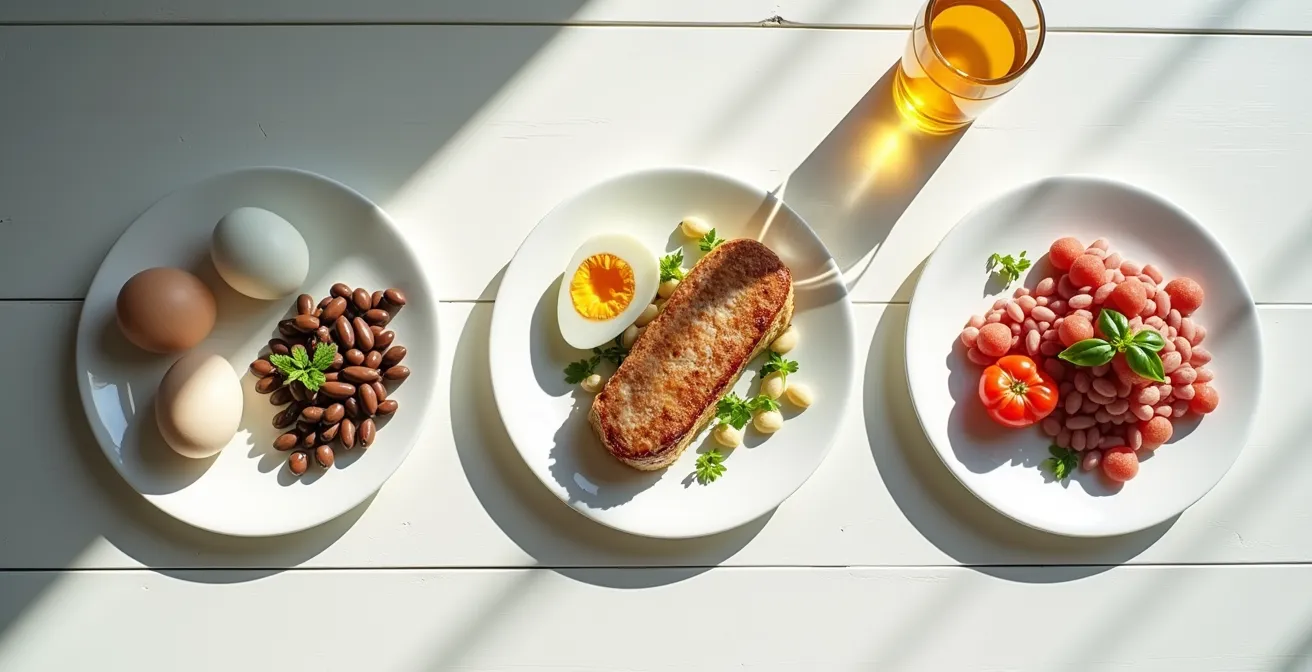
Once this initial anabolic signal is sent, the strategy shifts to sustaining MPS throughout your eating window. The best approach is to “pulse” protein intake, consuming 20-25 gram servings every 3-4 hours. This pattern repeatedly stimulates mTOR without overwhelming the system, allowing for sustained tissue repair and growth. It’s a structured approach that leverages the body’s heightened sensitivity after a fast. The combination with polyphenol-rich foods, such as berries and dark leafy greens, can further enhance the cellular response to these nutrients, supporting a more efficient rebuilding process.
A successful strategy requires precision:
- First Meal: Target 3g of leucine through a 25-30g serving of a complete protein source (e.g., eggs, whey protein, or a balanced plant-based combination).
- Eating Window Structure: Continue to pulse protein intake with 20-25g servings every 3-4 hours to maintain an anabolic state.
- Hydration: Consume protein with adequate water, as hydration is essential for all metabolic processes, including synthesis.
How to Switch to Plant-Based Without Bloating and Digestive Issues?
Transitioning to a plant-based diet offers immense benefits for the gut microbiome and, by extension, systemic health and autophagy. However, a rapid and drastic increase in dietary fiber is a common cause of significant digestive distress, including bloating, gas, and discomfort. This occurs because the gut microbiome, the community of trillions of microorganisms in your digestive tract, is adapted to your current diet. A sudden influx of new types and quantities of fiber can overwhelm the existing microbial populations, leading to fermentation by bacteria not equipped to handle the load, which produces excess gas.
The solution lies in a gradual and systematic transition that allows your microbiome time to adapt. The goal is to slowly introduce new fibers, giving beneficial fiber-fermenting bacteria the opportunity to grow and proliferate. A common recommendation from clinicians is to implement gradual fiber increases of 5g per week. This slow titration helps avoid overwhelming the system. Simultaneously, incorporating fermented foods like sauerkraut, kimchi, or kefir can introduce beneficial probiotic bacteria that aid in digestion. Using digestive enzymes, particularly in the initial weeks, can also provide external support by helping to break down complex carbohydrates and proteins that your body is not yet accustomed to processing efficiently.
A structured, multi-week protocol is the most effective way to repopulate your gut with the microbes needed to thrive on a plant-rich diet while minimizing side effects.
- Week 1: Start by adding a single serving of a high-fiber food per day (e.g., a cup of lentils or a large portion of leafy greens), aiming for about 5g of additional fiber. Introduce a small amount of a fermented food like sauerkraut with one meal.
- Week 2: Increase your fiber intake by another 5g per day. You might consider using a broad-spectrum digestive enzyme supplement with your largest meals to provide support.
- Week 3: Continue the gradual increase. Your digestive system should be adapting. Focus on a wider variety of plant fibers from different sources (legumes, whole grains, vegetables, fruits) to promote microbial diversity.
- Week 4: By now, your microbiome should be much more robust. You can aim for an optimal fiber intake (30-40g per day for most adults) and begin to phase out the use of digestive enzymes as your body’s own capabilities have improved.
Why 70% of Your Immune Defense Depends on Your Microbiome?
The statement that a majority of our immune system resides in the gut is not an exaggeration; it’s a physiological reality. The gut lining represents the largest interface between our internal body and the external world. To protect this vast border, an intricate network of immune cells, known as Gut-Associated Lymphoid Tissue (GALT), is embedded just beneath the intestinal wall. This strategic placement allows the immune system to constantly sample contents from the gut, learning to distinguish between harmless food antigens, beneficial commensal bacteria, and dangerous pathogens. The health and diversity of the gut microbiome directly modulate the behavior of these immune cells, effectively training and calibrating our immune responses.
A diverse microbiome, fed by a wide array of plant fibers, performs a critical function: it ferments these fibers into beneficial compounds called Short-Chain Fatty Acids (SCFAs), with butyrate being one of the most important. These molecules are not just waste products; they are powerful signaling molecules. Butyrate serves as the primary energy source for the cells lining the colon, strengthening the gut barrier and preventing inflammatory substances from “leaking” into the bloodstream. More profoundly, SCFAs directly interact with immune cells, promoting the differentiation of regulatory T-cells, which are crucial for preventing autoimmune reactions and taming excessive inflammation. This connection is fundamental to autophagy; chronic systemic inflammation is a known inhibitor of cellular repair. By maintaining a healthy microbiome that produces ample SCFAs, you are actively creating an anti-inflammatory internal environment that is permissive for robust autophagic activity throughout the body.
As a leading research team noted in the journal Nature Communications, the link between diet, gut health, and cellular repair is direct and powerful.
A healthy gut microbiome, fed by diverse plant fibers, produces short-chain fatty acids like butyrate that directly induce autophagy and support immune cell regeneration.
– Research team, Nature Communications
Key Takeaways
- True autophagy is triggered by strategic timing and digestive rest, not necessarily prolonged starvation.
- Optimizing cellular repair is a balancing act between catabolic clean-up (fasting, stress) and anabolic rebuilding (protein synthesis).
- Hormonal alignment, especially managing cortisol through a circadian-aligned eating window, is crucial for effective recovery.
- A diverse gut microbiome, fed by fiber, produces compounds that reduce inflammation and directly support systemic autophagy.
How to Build Muscle Mass on a Vegan Diet Without Supplements?
Building muscle on a vegan diet presents a unique challenge: obtaining sufficient complete protein and, specifically, the amino acid leucine, to trigger muscle protein synthesis (MPS) without relying on animal products or processed supplements. The solution lies in a highly strategic application of the principles of autophagy and timed nutrition. This approach creates a powerful synergy, using a fasted state to optimize cellular function and a well-structured eating window to provide the building blocks for growth. It is a system of distinct phases: a daily “clean-up” phase followed by a “rebuilding” phase.
The foundation of this strategy is a daily intermittent fast of 12-16 hours. This provides the window of digestive rest necessary to upregulate autophagy, clearing out old cellular debris and sensitizing the cells to anabolic signals. Research confirms this effect, showing that dawn-to-dusk intermittent fasting significantly increased autophagy gene expression after 4 weeks. Following this catabolic phase, the first meal is critical. To build muscle without supplements, one must combine plant-based protein sources to create a complete amino acid profile that meets the 3g leucine threshold. An effective and well-researched combination is pumpkin seed protein and brown rice protein. Pumpkin seeds are high in leucine, while brown rice protein complements the amino acid profile. This food-first approach delivers the strong anabolic signal required to shift the body into a state of growth.
Furthermore, the diet can be enhanced with “autophagy-mimetic” foods. These are foods containing compounds that can gently support autophagic processes even during a fed state. For instance, pomegranates, raspberries, and walnuts contain ellagitannins, which are converted by the gut microbiome into Urolithin A, a potent post-biotic known to enhance mitochondrial function and autophagy. By separating the catabolic (fasting) and anabolic (feeding) phases and using intelligent food combinations, it is entirely possible to build muscle mass effectively on a whole-food, plant-based diet.
Your Action Plan: The Plant-Based Muscle Building Protocol
- Morning Fasting Window: Implement a 12-16 hour daily fast to maximize autophagy for cellular cleaning and improve insulin sensitivity. Aim to finish your last meal in the early evening.
- Post-Fast Anabolic Meal: Break your fast with a meal designed to hit the ~3g leucine threshold. Combine sources like pumpkin seed protein and brown rice protein, or a large serving of lentils and quinoa.
- Strategic Protein Distribution: During your 8-12 hour eating window, space out protein-rich meals, consuming approximately 25g of protein every 3-4 hours to sustain the muscle protein synthesis signal.
- Integrate Autophagy-Mimetic Foods: Regularly include foods like pomegranates, raspberries, walnuts, and strawberries in your diet to support mitochondrial health and cellular maintenance via Urolithin A production.
- Separate Growth and Repair Phases: Consciously view your day in two distinct phases. The fasting period is for repair and sensitization. The feeding window is for providing the building blocks for growth and recovery.
Ultimately, optimizing cellular health is an active, intelligent process. By moving beyond the dogma of starvation and embracing the science of timing, you can create a sustainable and powerful strategy for long-term vitality. The next logical step is to begin systematically applying these principles to your own daily routine, observing how your body responds and adjusting accordingly.