
Transforming a flat roof into a green oasis is more than an aesthetic choice; it’s a strategic upgrade to your building’s performance and a contribution to urban resilience.
- Green roofs act as a “performance layer,” drastically reducing cooling costs and managing stormwater.
- Success hinges on a correct structural assessment and a flawlessly designed drainage system to prevent catastrophic failures.
- From a single roof to city-wide adoption, green infrastructure creates measurable ecological and economic value.
Recommendation: Start by commissioning a structural engineering report to understand your roof’s true capacity—this is the non-negotiable first step.
For most urban dwellers, a flat roof is a forgotten space—a barren expanse of tar or gravel, baking under the summer sun. The conventional approach to greening it often involves a few scattered pots, a noble but ultimately limited effort. This perspective, however, overlooks a profound opportunity. What if we stopped seeing the roof as the top of a building and started treating it as its most versatile, high-performance layer? What if it could become a living, breathing system that actively works for you and your city?
The key is to shift our thinking from simple rooftop gardening to what we call engineered ecology. This approach treats a green roof not as decoration, but as a fundamental component of the building’s infrastructure. It is a system designed for performance: to insulate, to manage water, to create habitat, and to last. This involves understanding the intricate dance between structural engineering, horticulture, and hydrology. It means moving beyond the platitudes of “it’s good for the environment” and diving into the specific mechanisms that deliver real, measurable results.
This guide will walk you through that process. We will deconstruct the science behind the benefits, address the critical technical challenges that trip up most DIY projects, and explore the different systems available. Ultimately, you will see how transforming your single roof is a step towards building a more resilient, functional, and vibrant urban ecosystem. It’s about turning a liability into a living asset.
In this comprehensive guide, we’ll explore the critical aspects of designing and implementing a green roof, from the initial energy-saving calculations to the long-term economic impact. The following sections provide a roadmap for your project.
Summary: A Landscape Architect’s Guide to High-Performance Green Roofs
- Why a green roof lowers your summer A/C bill by 25%?
- How to calculate the weight load of wet soil on an existing roof?
- Intensive vs Extensive: which roof garden requires less maintenance?
- The drainage layer error that causes leaks in 90% of DIY roof gardens
- When to plant sedum plugs for maximum survival rate in the city?
- How to increase organic yield using precision technology on small plots?
- How to insulate solid brick walls without causing damp issues?
- How to transform a ghost town into a thriving economic hub?
Why a green roof lowers your summer A/C bill by 25%?
The cooling effect of a green roof is not magic; it’s a combination of powerful thermodynamic principles. A conventional dark roof can reach temperatures exceeding 150°F (65°C) in direct sunlight, radiating that heat directly into the building below. A green roof fundamentally alters this dynamic through two primary mechanisms: shading and evapotranspiration. The vegetation and soil physically block solar radiation from ever reaching the roof membrane, acting as a natural shield.
More importantly, the plants actively cool the surrounding air through evapotranspiration—the process of releasing water vapor. This functions like a natural air conditioner for the roof surface itself. Research from the U.S. Environmental Protection Agency confirms the dramatic impact, showing that green roof surfaces can be up to 56°F lower than conventional roofs under the same conditions. This massive temperature differential significantly reduces the amount of heat transferred into your home or office.
The soil layer, or substrate, adds another benefit: thermal mass. It absorbs heat during the day and releases it slowly at night, buffering the building from extreme temperature swings. This stabilization effect means your air conditioning system doesn’t have to work as hard to combat the daily solar onslaught. Studies show this combination of effects can lead to a drastic reduction in energy consumption for cooling, with some demonstrating that green roofs can decrease cooling load by over 70%, translating directly into lower utility bills and a more comfortable indoor environment.
How to calculate the weight load of wet soil on an existing roof?
Before a single plant is considered, a green roof project begins with a structural engineer. Miscalculating the weight is the most dangerous and costly mistake an enthusiast can make. You must account for both the dead load (the permanent weight of the system) and the live load (temporary weights like snow, maintenance crews, or equipment). The most critical variable in the dead load is the weight of the substrate when fully saturated with water, which can be significantly heavier than its dry weight.
To begin, a structural engineer must assess your building’s original design documents to determine its load-bearing capacity. If documents are unavailable, a physical inspection is required. The calculation involves the weight of every component: the waterproof membrane, root barrier, drainage layer, filter fabric, substrate, and the vegetation itself. The substrate’s weight varies dramatically depending on its composition and depth. Lightweight, engineered growing media are used to minimize load while providing necessary drainage and nutrients.
The weight of a fully saturated green roof system can range from 15-25 pounds per square foot (lbs/sq ft) for a simple, shallow “extensive” system to over 150 lbs/sq ft for a deep “intensive” system that can support shrubs and trees. Understanding this difference is key to selecting a system that your structure can safely support without modification. Never guess or assume; a professional calculation is non-negotiable.
This comparative table illustrates how system type dictates structural requirements. As you can see from the analysis of green roof solutions, the jump from an extensive to an intensive system represents a massive increase in structural load.
| Green Roof Type | Weight Range (Saturated) | Substrate Depth |
|---|---|---|
| Extensive | 15-25 lbs/sq ft | 2-6 inches |
| Intensive | 150-600 lbs/sq ft | 6+ inches |
Your Structural Assessment Checklist
- Engage a professional: Hire a structural engineer to evaluate your roof’s current load-bearing capacity.
- Calculate the full dead load: Inventory every component and use the fully saturated weight of the chosen substrate for your calculation.
- Factor in live loads: Add the potential weight of heavy snowfall (based on local climate data), maintenance personnel, and any equipment.
- Verify point load capacity: Ensure the roof can handle concentrated weight during material staging and installation.
- Document and plan: Map out roof spans and joist directions to ensure the new load is distributed correctly across the structure.
Intensive vs Extensive: which roof garden requires less maintenance?
The choice between an intensive and an extensive green roof is the primary determinant of its long-term maintenance requirements. These two approaches represent opposite ends of the spectrum in terms of cost, weight, plant diversity, and human intervention. From a design perspective, the decision hinges on your goals and your building’s structural capacity.
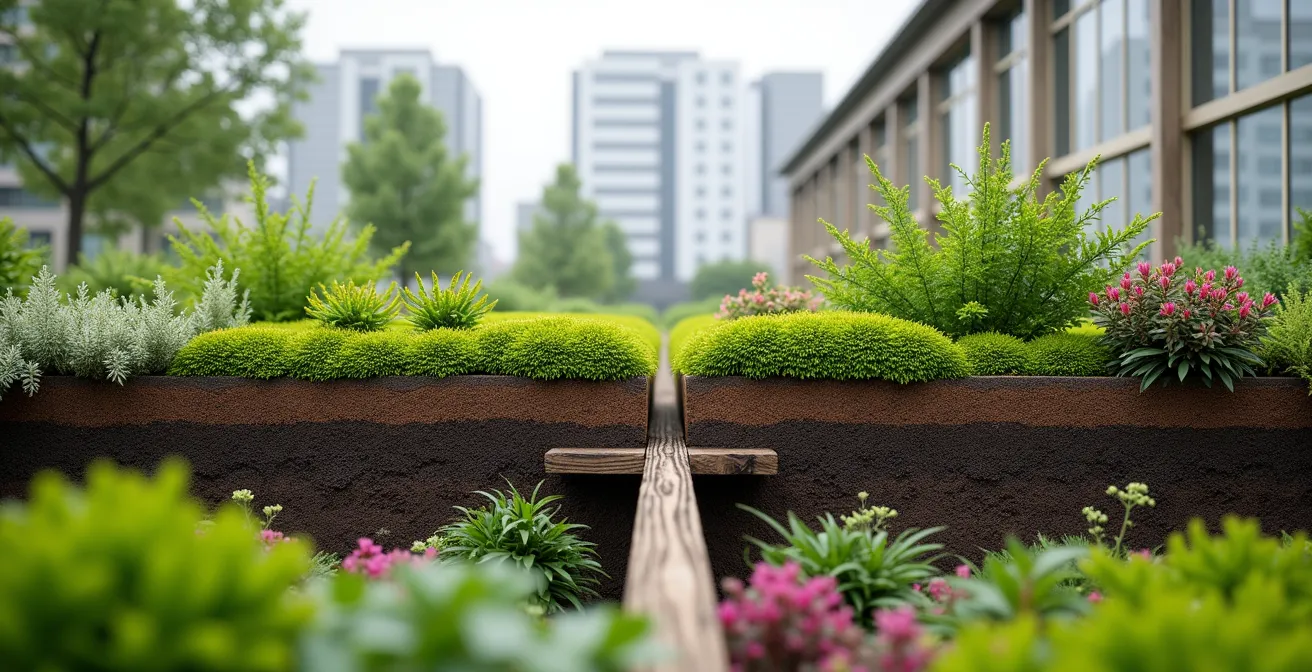
An extensive green roof is the low-maintenance option. Characterized by a shallow substrate layer (typically 2 to 6 inches), it is a lightweight system designed to be largely self-sustaining. It supports a limited palette of hardy, drought-tolerant plants like sedums and other succulents. The primary maintenance tasks involve one or two visits per year for weeding, checking drains, and applying a slow-release fertilizer. It’s an “engineered ecology” designed for survival, not for lush aesthetics or human use. It is the most common choice for retrofitting existing buildings due to its minimal structural demands.
A intensive green roof, by contrast, is a true rooftop garden. With a soil depth of six inches to several feet, it can support a wide variety of plants, including perennials, grasses, shrubs, and even small trees. This complexity requires a commitment to regular maintenance comparable to a ground-level garden: irrigation, mowing, pruning, and pest management. While they offer far greater aesthetic and recreational possibilities, they are significantly heavier and more expensive, typically requiring a structure specifically designed to support them.
The visual difference between these two systems highlights their inherent complexity and, by extension, their maintenance needs. An extensive roof is a hardy, functional carpet, while an intensive roof is a cultivated garden ecosystem.
Even semi-intensive roofs, which offer a middle ground, require attention. For example, biodiverse roofs designed to attract pollinators need a minimum of two to three maintenance sessions per year to remain healthy. Ultimately, less weight and less plant diversity directly translate to less maintenance.
The drainage layer error that causes leaks in 90% of DIY roof gardens
While structural failure is the most catastrophic risk, water damage is the most common. A properly installed green roof will not cause leaks; in fact, it protects the underlying waterproof membrane from UV degradation and temperature fluctuations, extending its life. However, a single mistake in the assembly of the drainage system can lead to persistent water intrusion, root damage, and costly repairs. The most frequent error is the improper installation or omission of a dedicated root barrier.
Many standard roofing membranes are not certified as “root-resistant.” Over time, the fine, persistent roots of even simple plants like sedums can work their way into seams and microscopic fissures, compromising the waterproof seal. A separate root barrier, typically a specialized polymer sheet, must be laid over the waterproofing membrane. It is crucial that the seams of this barrier are overlapped sufficiently (at least 50cm or 20 inches) to create an impassable shield.
The second critical component is the drainage and retention layer. This is usually a dimpled plastic mat or a layer of lightweight aggregate that creates a void space. Its job is twofold: to quickly channel excess water away to the roof drains and to hold a small reservoir of water within its cups to sustain the plants during dry spells. Above this sits a filter fabric, which prevents soil particles from washing down and clogging the drainage system. Omitting or improperly installing any of these layers will lead to a waterlogged, unhealthy system that puts the building at risk. When correctly assembled, the system is incredibly reliable. Indeed, industry leaders confirm that 100% leak prevention is achievable when a root-resistant system is properly installed.
When to plant sedum plugs for maximum survival rate in the city?
For extensive green roofs, timing and method of planting are crucial for success, especially in the harsh microclimate of an urban rooftop. While sedums are incredibly resilient, establishing them from individual “plugs” (small, rooted plants) requires careful planning to maximize their survival rate. The two key factors are seasonal timing and the alternative of using pre-vegetated mats.
The best time to plant sedum plugs is either in the early spring or early autumn. Planting in spring gives the plants a full growing season to establish their root systems before the stresses of winter. Autumn planting takes advantage of cooler temperatures and more frequent rainfall, allowing the roots to establish before the ground freezes. Planting in the peak of summer is the riskiest approach; the intense sun and heat on a rooftop can quickly desiccate young plugs before they have a chance to root properly, leading to high failure rates. A shallow substrate layer has very little water-holding capacity, making this period particularly dangerous.
However, the most effective way to ensure success and bypass the vulnerabilities of plug planting is to use pre-vegetated blankets or mats. These are rolls of mature, established plants already growing in a thin substrate layer held together by a biodegradable mesh. They are simply rolled out onto the prepared roof for instant coverage. This method provides a mature plant community from day one, which is far more resilient to drought, heat, and weed competition. Leading suppliers have perfected this method, confirming that vegetation blankets achieve at least 95% minimum coverage from day one, eliminating the establishment risk associated with plugs.
Using pre-vegetated blankets provides an instant, robust plant layer, allowing the engineered ecology to begin functioning immediately. This approach is highly recommended for projects where rapid establishment and low initial risk are priorities.
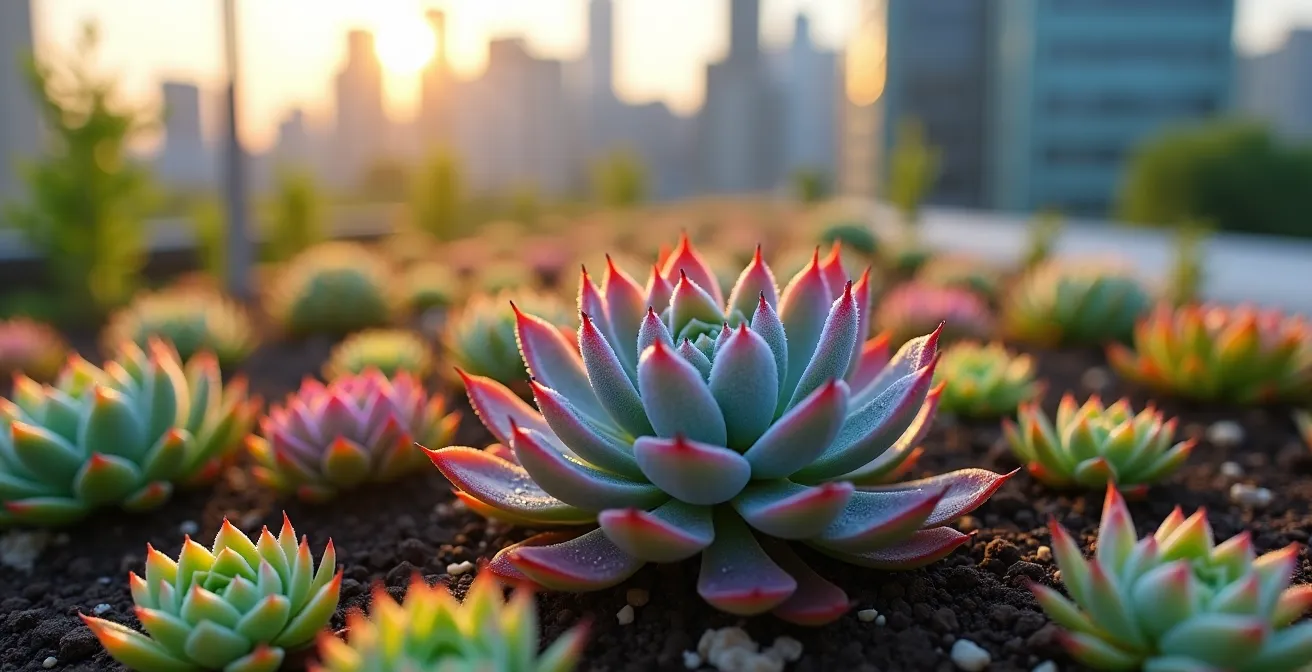
While more expensive upfront, the near-100% success rate and immediate aesthetic and ecological benefits of vegetation blankets often make them a more cost-effective choice in the long run compared to the potential need to replace failed plugs.
How to increase organic yield using precision technology on small plots?
When an intensive green roof is designed for urban agriculture, the principles of “precision technology” take on a new meaning. On a rooftop, precision isn’t just about GPS-guided tractors; it’s about the precise engineering of the growing environment itself. The limited space and structural constraints demand a more sophisticated approach to maximizing yield, focusing on vertical space, resource management, and creating diverse micro-habitats.
One key strategy is using varied substrate depths. Instead of a uniform layer of soil, a roof can be designed with deeper pockets or mounds of substrate in specific areas that are structurally supported. This “structural precision” allows for a greater diversity of crops. Shallow areas can host lettuces and herbs, while deeper sections can support root vegetables like carrots or fruiting plants like tomatoes, which require more root volume. Recent innovations in rooftop agriculture demonstrate how a gradual increase in substrate depth facilitates deeper plant roots and more biological diversity, which in turn supports higher yields.
Resource management is another area for precision. Drip irrigation systems with soil moisture sensors deliver water directly to the plant roots with minimal waste from evaporation—a critical concern on a windy, exposed rooftop. Similarly, nutrient delivery can be fine-tuned through fertigation (applying fertilizer through the irrigation system), ensuring plants get exactly what they need when they need it. This avoids the nutrient runoff common in conventional gardening. By combining structural design with resource management, even a small rooftop plot can become a highly productive and efficient source of organic produce.
How to insulate solid brick walls without causing damp issues?
A green roof is a powerful insulator, but it’s only one part of a building’s total thermal defense system, known as the building envelope. To maximize energy efficiency, the performance of the roof must be integrated with the performance of the walls. For older buildings with solid brick walls, insulation presents a unique challenge: preventing trapped moisture. A green roof can inadvertently help mitigate this risk by stabilizing the building’s overall temperature and reducing thermal stress.
Solid brick walls need to “breathe”—they manage moisture by allowing it to be absorbed and then evaporate away. Applying non-breathable insulation (like many common foam boards) to the interior or exterior can trap moisture within the wall, leading to dampness, mould, and eventual degradation of the brick and mortar. The key is to use vapor-permeable (breathable) insulation materials like cork, wood fiber, or cellular glass, which insulate while still allowing moisture to escape.
This is where the synergy with a green roof becomes apparent. As a leading industry analysis points out, the a green roof’s ability to regulate temperature is not just an isolated benefit.
Thermal insulation plays a crucial role in the success of a green roof. Not only does it help stabilize interior conditions of the building, it helps regulate soil temperatures to promote the effective growth of rooftop vegetation in all seasons.
By dramatically reducing the temperature of the roof, the green roof lessens the overall thermal load on the entire building. This creates a more stable indoor temperature, which in turn reduces the condensation potential within the walls. A cooler building in summer means less temperature difference between inside and outside, which is a primary driver of moisture movement. By treating the roof and walls as one integrated system, you can achieve superior insulation without creating new problems.
Key Takeaways
- Structural Integrity First: Always begin with a professional engineering assessment to confirm your roof’s load capacity before any other step.
- Choose Your System Wisely: Decide between a low-maintenance, lightweight extensive system and a garden-like, high-maintenance intensive system based on your building and resources.
- Drainage is Everything: The correct layering of a root barrier, drainage mat, and filter fabric is non-negotiable to prevent leaks and ensure the system’s longevity.
How to transform a ghost town into a thriving economic hub?
The principles of engineered ecology, when scaled from a single building to a district or city, can become a powerful engine for urban revitalization. A “ghost town”—whether a depopulated rural area or a neglected industrial zone in a city—suffers from a lack of life: biological, social, and economic. A large-scale implementation of green infrastructure, with green roofs at its core, can directly address all three, transforming a sterile environment into a thriving hub.
Firstly, it re-establishes a biodiversity foundation. A network of green roofs creates a mosaic of habitats, forming corridors for pollinators and birds to move through the urban landscape. The Javits Center in New York City, once a monolithic “bird-killer,” transformed its 7-acre roof into a sanctuary that now hosts 65 bird species, 5 bat species, and thousands of native insects. This ecological revival makes a city more resilient and a more attractive place to live, drawing people back to neglected areas.
Secondly, it creates a green economy. The design, installation, and maintenance of green roofs are skilled jobs that cannot be outsourced. This creates a sustainable local employment sector. Furthermore, the energy savings and stormwater management benefits reduce the financial burden on building owners and municipal governments. According to an estimate by American Rivers, every $10 billion invested in green stormwater infrastructure could create up to 190,000 jobs. This economic activity, combined with the increased property values and desirability of green-certified buildings, creates a virtuous cycle of investment and growth.
By re-integrating nature into the very fabric of our buildings, we do more than save on air conditioning. We create healthier, more resilient, and economically vibrant communities. Your roof is not just a roof; it’s the first step in rebuilding our urban metabolism. Evaluate your roof’s potential and begin planning your contribution to a greener city today.