Lifestyle
Contemporary lifestyle encompasses far more than aesthetic choices or consumer preferences. It represents the intricate tapestry of decisions we make daily—from how we navigate our cities to how we design our living spaces, manage our mental health, and allocate our time between productivity and restoration. These choices compound over time, shaping not only our immediate comfort but our long-term wellbeing, financial stability, and environmental footprint.
The modern lifestyle challenge lies in balancing competing demands: sustainable living within urban constraints, maintaining mental clarity amid constant stimulation, optimizing physical spaces and routines for efficiency, and cultivating genuine wellbeing rather than merely chasing productivity. This comprehensive exploration examines the core pillars of contemporary lifestyle design, offering practical frameworks for making informed decisions across housing, mobility, wellness, and daily resource management.
Urban Mobility and the Modern Commute
The daily commute represents one of the most significant yet underexamined lifestyle factors affecting urban dwellers. Research consistently shows that commute quality influences job satisfaction, relationship health, and overall life contentment more than many realize. A seamless multi-modal journey—combining walking, cycling, public transit, and micro-mobility options—requires strategic planning rather than improvisation.
Understanding Commute Stress Factors
Commute-related stress doesn’t stem solely from duration. Three primary factors compound to create daily friction: unpredictability (schedule variability that prevents routine formation), connection anxiety (the cognitive load of timing transfers between modes), and physical discomfort (overcrowding, extreme temperatures, or poor ergonomics). Identifying which factor dominates your experience allows targeted intervention rather than wholesale route changes.
Optimizing Last-Mile Solutions
The journey’s first and final segments—from door to transit hub—often consume disproportionate time and energy. Comparing options requires evaluating multiple dimensions:
- Walking: Zero cost, predictable timing, health benefits, limited by weather and distance
- Personal bicycles: Flexible routing, moderate speed, requires secure storage at both ends
- Bike-share systems: Eliminates storage concerns, variable availability during peak hours
- E-scooters: Fastest option for 1-3 km distances, higher per-trip cost, weather-dependent
The optimal choice shifts seasonally and situationally. Many successful commuters maintain a tiered system—a primary method supplemented by weather alternatives—rather than forcing a single solution year-round.
Housing in High-Density Urban Environments
Metropolitan housing markets increasingly demand creative approaches as traditional affordability metrics break down. Cities experiencing strong economic growth often see housing costs outpace income growth by substantial margins, forcing residents to reconsider fundamental assumptions about space requirements and tenure models.
The Micro-Living Movement
Micro-apartments—typically ranging from 15 to 35 square meters—represent more than downsizing. Well-designed compact spaces emphasize functional density: every square meter serves multiple purposes through transformable furniture, vertical storage systems, and careful circulation planning. Residents report that the transition’s difficulty stems less from physical space constraints than from confronting consumption habits and attachment to possessions.
The psychological adjustment involves reframing limitations as curation opportunities. Rather than asking “What must I sacrifice?”, successful micro-living adopts the lens of “What deserves my limited space?” This mental shift often extends beyond physical objects to time allocation and commitment selection.
Navigating Tenure Models
The traditional ownership-versus-rental dichotomy oversimplifies contemporary options. Emerging models include:
- Co-living arrangements: Private bedrooms with shared amenities, reducing per-person costs while maintaining community
- Limited-equity cooperatives: Resident ownership with resale price restrictions, balancing stability and affordability
- Lease-to-own programs: Gradual equity accumulation through rental payments, though terms require careful evaluation
- Flexible-term rentals: Month-to-month or seasonal contracts for those prioritizing mobility over stability
Choosing appropriately requires honest assessment of your mobility timeline—how long you intend to remain in the area—and risk tolerance for market fluctuations.
Sustainable Home Design and Energy Efficiency
Energy performance dramatically impacts both environmental footprint and monthly expenses, yet remains invisible until manifested in utility bills. Retrofitting existing homes for passive house standards—the gold standard for thermal performance—delivers measurable returns while increasing comfort and resilience.
The Thermal Envelope Strategy
Heat loss occurs through three mechanisms: conduction through solid materials, convection through air leakage, and radiation through windows. Effective insulation addresses all three simultaneously. Identifying thermal bridges—structural elements that conduct heat faster than surrounding materials—proves critical, as these localized weaknesses can undermine overall envelope performance by 20-30%.
Common thermal bridge locations include floor-wall junctions, window frames, and balcony attachments. Thermal imaging cameras reveal these invisible energy drains, though even without specialized equipment, condensation patterns during cold weather indicate problem areas requiring attention.
Calculating Retrofit Payback Periods
Energy improvements require upfront investment with returns distributed over years or decades. Simple payback calculations—dividing installation cost by annual savings—provide initial screening, but comprehensive analysis incorporates:
- Avoided maintenance costs (new windows eliminate painting, better insulation prevents moisture damage)
- Comfort improvements that resist monetary quantification but affect daily quality of life
- Property value increases in markets where efficiency ratings influence buyer decisions
- Utility price trajectories, which historically trend upward faster than general inflation
Measures with 7-12 year paybacks typically prove worthwhile for homeowners planning extended occupancy, while rental properties require shorter 3-5 year returns to justify landlord investment.
Minimalism and Cognitive Space
The minimalist movement extends beyond aesthetic preferences to address fundamental questions about attention, decision fatigue, and mental bandwidth. Physical clutter creates measurable cognitive load—the visual cortex continuously processes environmental stimuli, consuming mental resources even when we’re consciously focused elsewhere.
Decluttering yields two distinct benefits: the immediate reduction in visual noise that facilitates concentration, and the longer-term decrease in maintenance burden as fewer possessions require cleaning, organizing, repairing, and decision-making. A systematic approach treats different possession categories according to their replacement difficulty and emotional significance rather than applying uniform criteria.
Designing for Accessibility and Flexibility
Effective space organization anticipates changing needs rather than optimizing for current circumstances alone. Under-stair spaces, awkward corners, and vertical zones above eye level represent opportunities for seasonal rotation systems—storing items during their off-months while keeping active possessions immediately accessible. This approach requires upfront categorization effort but eliminates the daily friction of navigating irrelevant items.
Avoid over-customization that locks spaces into single functions. Built-in furniture and permanent fixtures may maximize immediate efficiency but prevent adaptation as needs evolve. Modular systems with standardized dimensions offer superior long-term value despite initially appearing less optimized.
Mental Wellness and Emotional Intelligence
High-stress environments—whether professional, urban, or personal—demand sophisticated emotional regulation strategies. The traditional advice to “manage stress” oversimplifies a complex challenge requiring differentiated approaches for different stressor types and individual psychological profiles.
Recognizing Burnout Progression
Burnout develops through identifiable stages rather than appearing suddenly. Early phases manifest as persistent fatigue despite adequate sleep and decreased enthusiasm for previously enjoyable activities. Middle stages introduce cynicism and detachment—emotional distancing from work, relationships, or responsibilities as a protective mechanism. Advanced burnout produces genuine inability to perform routine tasks and may require professional intervention.
Early detection enables course correction through workload adjustment, boundary reinforcement, or role modification. Once burnout reaches advanced stages, recovery timelines extend from weeks to months, even with aggressive intervention.
Building Support Systems Strategically
Emotional support networks require intentional cultivation and diversity. Relying on a single relationship—romantic partner, best friend, or therapist—creates fragility and places unreasonable burden on that person. Effective support systems incorporate:
- Processing relationships: People you can think aloud with, exploring problems without expectation of solutions
- Perspective providers: Individuals outside your immediate context who offer different frameworks
- Accountability partners: Those who track commitments and provide gentle confrontation when needed
- Professional resources: Therapists, coaches, or counselors for issues requiring specialized expertise
Matching the support type to the need prevents disappointment and relationship strain that occurs when we seek inappropriate resources for specific challenges.
Flow States and Cognitive Restoration
Flow—the experience of complete absorption in challenging activities—provides cognitive restoration distinct from passive rest. Unlike relaxation, which reduces arousal, flow states combine high challenge with high skill, producing focused attention that paradoxically refreshes mental resources through engagement rather than withdrawal.
Cultivating regular flow experiences requires identifying activities matching your current skill level while providing clear goals and immediate feedback. Musical instruments, creative hobbies, strategic games, and physical skills all offer flow potential, but the specific activity matters less than the challenge-skill balance.
Preventing Hobby Monetization Pressure
Contemporary culture pressures competent amateurs to monetize skills, transforming restorative hobbies into side businesses. This conversion fundamentally alters the activity’s psychological function—introducing external evaluation, deadlines, and market demands that eliminate flow potential. Protecting hobbies from commercialization requires conscious resistance to the “productivity” narrative that views all skilled activity as potential income.
Distinguishing between hobbies (intrinsically motivated skill development) and side businesses (income-generating activities) prevents the erosion of genuine leisure. Both serve legitimate purposes, but conflating them risks losing the cognitive restoration that uncommercial hobbies uniquely provide.
Digital Life and Subscription Management
Streaming services, software subscriptions, and digital memberships now constitute significant household expenses, often totaling more than traditional utilities. The subscription model’s convenience masks cumulative costs while creating decision fatigue through overwhelming content libraries and continuous service evaluation.
Understanding Viewing Psychology
Paradoxically, expanded content access often reduces satisfaction rather than enhancing it. The abundance of options triggers extended browsing sessions where selection time exceeds viewing time, creating frustration and perceived waste. This phenomenon—choice paralysis—stems from fear of choosing suboptimally when aware of vast alternatives.
Implementing artificial constraints—limiting yourself to specific genres, following curated lists, or restricting browsing to fixed timeframes—counterintuitively improves satisfaction by reducing cognitive load and preventing decision fatigue from consuming leisure time.
Comparing Service Models Strategically
Different subscription services optimize for different usage patterns. Evaluating appropriateness requires tracking actual consumption rather than intended use:
- Monitor viewing/usage for one complete month before committing to annual plans
- Calculate per-use cost by dividing subscription price by actual utilization instances
- Compare against à la carte alternatives for your specific consumption pattern
- Schedule quarterly reviews rather than allowing subscriptions to run indefinitely unchanged
Services heavily used warrant annual prepayment for cost savings, while sporadic usage justifies month-to-month flexibility despite higher per-month rates. The optimal portfolio typically combines 1-2 core subscriptions with rotating services activated for specific content then cancelled.
Active Living and Physical Pursuits
Physical activities provide dual benefits—immediate health effects and psychological restoration—but require technical progression for sustained engagement. Whether pursuing winter sports, cycling, climbing, or other skill-based activities, understanding biomechanical principles and equipment mechanics accelerates improvement while reducing injury risk.
Technical sports demand patient skill layering. Rushing progression—attempting advanced techniques before mastering fundamentals—creates compensatory movement patterns that later require effortful correction. Structured progression, while slower initially, produces superior long-term results and prevents the common plateau where self-taught practitioners stagnate despite continued effort.
Injury Prevention Through Movement Awareness
Common injuries in recreational sports stem from technique flaws rather than bad luck. ACL tears, rotator cuff strains, and stress fractures often trace to biomechanical deficiencies that accumulate stress over time until structural failure occurs. Working with qualified instructors during early skill development establishes proper movement patterns before poor techniques become ingrained habits requiring extensive remediation.
Equipment selection influences injury risk substantially. Properly fitted gear adapted to your skill level provides appropriate feedback and forgiveness, while advanced equipment optimized for expert users may demand precision beyond intermediate capabilities, increasing injury likelihood.
Lifestyle design ultimately reflects prioritization—choosing what deserves your limited resources of time, attention, money, and space. The frameworks explored here provide structure for these decisions, but implementation requires honest assessment of your unique circumstances, constraints, and values. Begin by identifying your primary pain points rather than attempting comprehensive optimization simultaneously. Targeted improvements in commute quality, housing efficiency, mental wellness practices, or digital habits compound over time, creating sustainable lifestyle evolution rather than overwhelming transformation attempts that rarely persist beyond initial enthusiasm.

How to Cure “Choice Paralysis” When Facing Infinite Content Libraries?
The solution to streaming choice paralysis isn’t just managing subscriptions; it’s about managing your own cognitive architecture to reclaim your time and mental energy. Decision fatigue and the paradox of choice are the psychological traps causing you to scroll endlessly…
Read more
How to Regulate Your Reactions During Professional Conflict: An EQ Framework for Leaders
True emotional regulation in conflict isn’t about suppression; it’s about upgrading your internal operating system to handle professional pressure with composure. Recognize emotions not as threats, but as objective data to prevent the physiological exhaustion that derails leadership. Use structured…
Read more
How to Choose a Hobby That Repairs Your Attention Span
The most effective way to repair a fragmented attention span is not through passive consumption, but by engaging in complex, process-oriented physical creation that synchronizes mind and body. Learning complex motor skills physically rebuilds the brain’s focus pathways by increasing…
Read more
Beyond the Flex Number: How to Choose the Right Ski Stiffness for Your Weight and Ability
In summary: Ski stiffness isn’t a single number but part of a “kinetic chain” from your foot to the snow. Proper boot alignment is non-negotiable; it’s the foundation for efficient force transfer and knee health. Stiffness must match your ability,…
Read more
How to turn a flat roof into a biodiversity haven and insulation layer?
Transforming a flat roof into a green oasis is more than an aesthetic choice; it’s a strategic upgrade to your building’s performance and a contribution to urban resilience. Green roofs act as a “performance layer,” drastically reducing cooling costs and…
Read more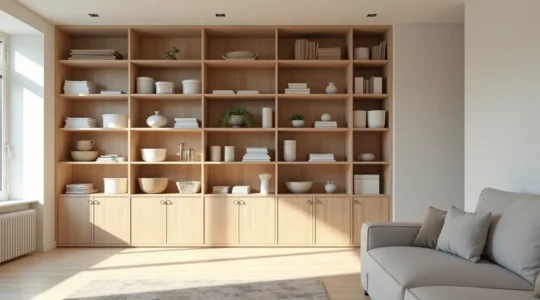
How to Design Storage That Forces You to Stay Organized
Contrary to popular belief, staying organized isn’t about willpower or buying more bins; it’s about designing your environment with ‘intentional friction’. Clutter physically raises stress hormones, making it harder to relax and maintain order. Storage that is either too generic…
Read more
How to cut your heating bill by 60% without rebuilding from scratch?
The biggest heating cost savings in an old home don’t come from expensive new windows or boilers, but from systematically sealing the building’s hidden air leaks. Uncontrolled air leakage can account for up to 40% of your home’s energy loss,…
Read more
How to Live in a City Without Spending 50% of Your Income on Rent
In summary: Embrace voluntary downsizing not just to save money, but as a direct path to financial freedom. Hack the housing system by exploring alternative models like tiny homes and co-living to bypass the traditional rental market. Master spatial arbitrage…
Read more
Master Your Commute: How to Eliminate Stress by Mixing Transport Modes Like a Logistics Pro
The key to a stress-free commute is not avoiding delays, but building a resilient personal logistics system that absorbs them. Treat your daily journey as a supply chain to be optimized, not a single route to be endured. Use real-time…
Read more