A truly relaxing family vacation hinges not on the destination, but on mastering a system of ‘frictionless transitions’ that pre-empts common stress points.
- Proactive logistics in packing and meal planning eliminate the most frequent sources of parental anxiety.
- Viewing amenities like Kids’ Clubs as tools for family balance, not abandonment, is key to personal recovery.
Recommendation: Shift your focus from planning activities to engineering smooth, predictable changes between them—this is the secret to unlocking genuine rest for the entire family.
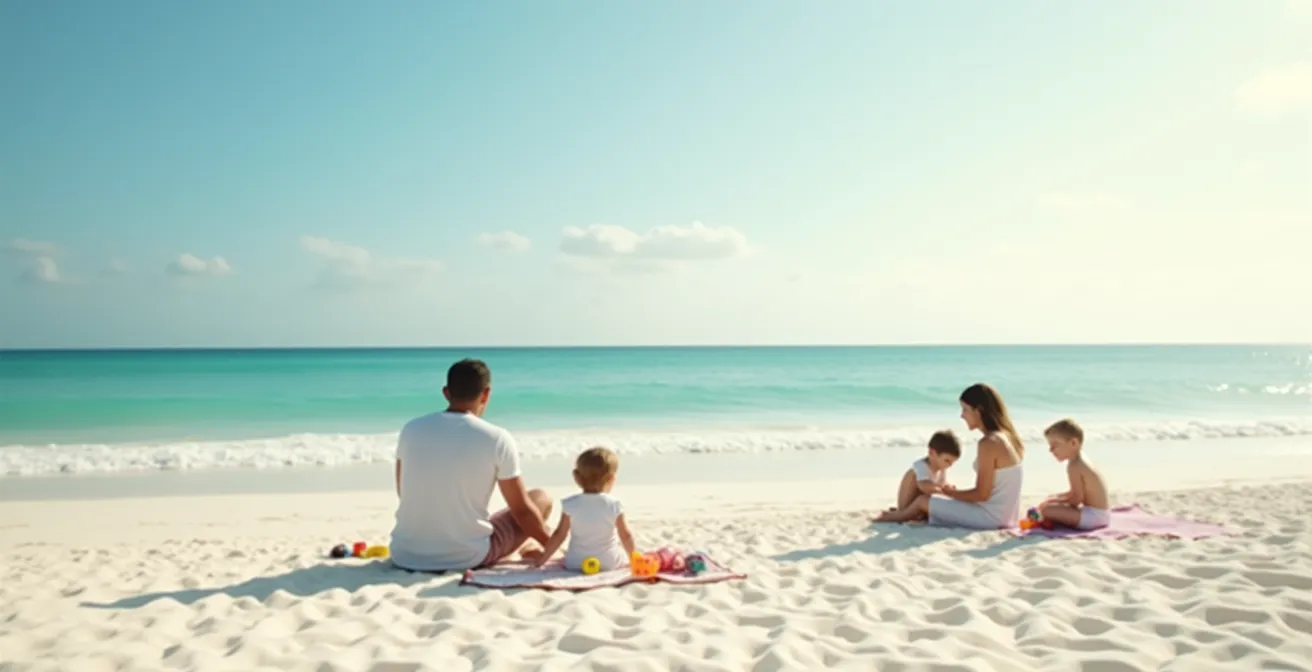
The image is a familiar one for many parents: a pristine beach, a turquoise sea, and the pervasive, low-level hum of anxiety. The dream of a relaxing escape often collides with the reality of managing children in an unfamiliar environment. We’re told to pick “family-friendly” resorts, to stick to nap schedules, and to lower our expectations. But these well-meaning platitudes often fail to address the core issue: the logistical friction and decision fatigue that turn a holiday into a childcare project with a better view.
The common advice focuses on what to do, but rarely on *how* to do it in a way that preserves parental energy. The stress doesn’t come from the big events, but from the thousand tiny, chaotic transitions: from the hotel room to the pool, from playtime to mealtime, from a bustling buffet back to a quiet room for a nap. It’s in these moments that meltdowns occur, patience frays, and the promise of relaxation evaporates.
But what if the key wasn’t simply choosing the right place, but implementing the right *system*? This guide reframes the family vacation away from a checklist of activities and towards a strategy of logistical pre-emption. It’s about creating ‘frictionless transitions’ that anticipate and neutralize stress before it can build. By mastering a few key systems for packing, eating, and navigating the resort environment, you can transform your vacation from a test of endurance into a period of genuine recovery for everyone.
We’ll explore how to leverage resort amenities strategically, pack with military precision to minimize chaos, navigate the perilous buffet, and find deals that reduce financial pressure. This is your journalistic field guide to reclaiming your vacation.
Summary: The Parent’s Paradox: How to Actually Relax on Vacation with Young Children
- Why Kids’ Clubs are a tool for family balance, not abandonment?
- How to pack for a family of 4 in two carry-ons?
- All-inclusive Giant vs Boutique Hotel: which handles picky eaters better?
- The buffet food mistake that leads to traveler’s tummy
- When to book resort vacations to get kids-stay-free deals?
- The “Resort Fee” trap that adds $500 to your budget week
- Why switching modes is often less stressful than sitting in traffic?
- How to harness the sea’s elements for physical recovery?
Why Kids’ Clubs are a tool for family balance, not abandonment?
The concept of the Kids’ Club is often fraught with parental guilt, viewed as a form of convenient abandonment. However, a strategic shift in perspective is necessary: a high-quality Kids’ Club is not a babysitting service, but an enrichment opportunity for children and a vital tool for parental energy management. For children, especially those between 3 and 12 years old, these clubs offer a structured environment with age-appropriate activities and a chance to socialize with peers—an experience often more engaging than trailing along with adults. This is a core part of achieving family balance, where both children and parents have experiences tailored to them.
The success of this model is exemplified by leaders like Disney Cruise Line, whose Oceaneer Clubs are so immersive with activities like a Marvel Super Hero Academy that children actively ask to attend. This transforms the dynamic from parents “dropping off” their kids to children eagerly participating in their own unique part of the vacation. This creates pockets of adult-only time that are not just “free time,” but are essential for recharging and reconnecting, allowing parents to return to family activities with renewed patience and enthusiasm. The goal is a vacation that offers parallel, positive experiences, leading to a more harmonious whole.
Of course, this balance is predicated on trust and safety. Entrusting your children to others requires due diligence. Before you even arrive at the resort, your focus should be on vetting the club’s credentials and protocols. A thorough evaluation of their safety standards is the first step in unlocking this powerful tool for a relaxing vacation. The peace of mind that comes from knowing your child is in a secure, stimulating environment is immeasurable.
Trust & Safety Checklist for Evaluating Kids’ Clubs
- Verify staff-to-child ratio and background check policies. A good benchmark is 1:4 for toddlers and 1:8 for older kids.
- Inspect security protocols, including secure sign-in/out procedures, use of wristbands, and restricted access to the area.
- Review the activity schedule for age-appropriate, engaging programming beyond simple supervision.
- Assess cleanliness and sanitization practices, especially in high-touch areas and restrooms.
- Confirm allergy management protocols and how they accommodate children with special needs.
How to pack for a family of 4 in two carry-ons?
The vacation stress often begins before you leave the house, with the monumental task of packing. The “pack for every eventuality” mindset leads to oversized, heavy luggage that becomes an anchor, creating logistical friction at every turn—from airport check-ins to crowded hotel rooms. The solution is not to pack more, but to pack smarter with a system designed for efficiency and access. The goal is to eliminate clutter and the daily “what to wear” debate that can derail a morning. Adopting a minimalist approach with carry-on only luggage forces a level of organization that pays dividends throughout the trip.
The most effective method for achieving this is the Daily Outfit Cube Method. This system transforms packing from a chaotic pile into a structured, grab-and-go library of clothes. By assigning one packing cube per day and rolling complete outfits together for each family member, you pre-make decisions at home. In the morning, you simply open the cube for that day, and everyone’s clothes are ready. This simple act of ‘logistical pre-emption’ saves time, reduces mess, and, most importantly, conserves precious mental energy for more enjoyable decisions.
This organizational strategy is about more than just fitting things into a small space; it’s about creating a system that makes life easier on the other side. Color-coding cubes per family member and having a dedicated cube for swimwear or a “first 24 hours” arrival kit further reduces friction. The result is a travel experience where your luggage works for you, not against you, keeping the hotel room tidy and the focus on the vacation itself.

As you can see, organizing by cube creates a modular system within your suitcase. It’s a visual representation of order that translates directly into a more seamless daily routine. Instead of digging through a jumble of clothes, each day’s needs are neatly contained and accessible, making getting ready for the day’s adventures quick and stress-free.
All-inclusive Giant vs Boutique Hotel: which handles picky eaters better?
Mealtime is a notorious battleground for parents of picky eaters, and the vacation environment can either soothe or exacerbate this stress. The choice between a sprawling all-inclusive resort and a smaller boutique hotel often comes down to a trade-off between overwhelming choice and personalized flexibility. Understanding which environment best suits your child’s temperament is a critical piece of logistical pre-emption. A giant resort buffet seems like a perfect solution with its endless options, but for some children, the sheer volume of choices, sights, and sounds can lead to sensory overload and mealtime refusal.
The boutique hotel, with its smaller, curated menu, offers a more predictable and calmer dining experience. While there are fewer options, the kitchen staff and servers often have greater capacity for personalization. A direct relationship with the chef means off-menu requests like “plain pasta with butter” or “steamed carrots” are not just possible, but often easily accommodated. This high level of staff attention can make a child feel seen and catered to, transforming a potentially stressful meal into a positive experience. The giant resort, by contrast, operates on mass production, where customization is often difficult.
To navigate the all-inclusive buffet successfully, parents can employ the “no-plate reconnaissance” technique. This involves walking through the entire buffet with your child *before* getting a plate, turning it into a game to spot familiar “safe” foods. This simple strategy gives the child a sense of control and transforms an overwhelming environment into a manageable one. It reduces anxiety by creating a predictable plan before the commitment of food on a plate is made.
The following table breaks down the key differences to help you decide which option aligns best with your family’s needs, as informed by a recent comparative analysis.
| Feature | All-Inclusive Giant Resort | Boutique Hotel |
|---|---|---|
| Menu Variety | Multiple buffets with 100+ options daily | Smaller curated menu (20-30 items) |
| Sensory Overload Risk | High – overwhelming choices and crowds | Low – predictable, calm environment |
| Off-Menu Flexibility | Limited – standardized mass production | High – chef can customize easily |
| Plain Food Availability | Usually available at buffet stations | Made to order upon request |
| Wait Times | Immediate at buffets | 10-15 minutes for custom orders |
| Staff Attention | Minimal personal interaction | Dedicated server knows preferences |
The buffet food mistake that leads to traveler’s tummy
Nothing can derail a vacation faster than a bout of traveler’s tummy, and the all-inclusive buffet, for all its convenience, can be a primary culprit. The most common mistake parents make is not about *what* they choose, but *when* and *how* they choose it. The single greatest risk factor is food held at improper temperatures. According to food safety experts who warn that buffet items held between 40°F and 140°F (5°C – 60°C) enter a “danger zone” where bacteria can multiply rapidly, this is the number one thing to watch for.
A dish that looks delicious but is merely lukewarm is a far greater risk than a freshly grilled item. The key is to become a savvy observer of the buffet’s operations. The best strategy is to arrive at the very beginning of a meal service, when the food is freshest and hottest. Look for tangible signs of heat: is there steam rising from the hot dishes? Are the serving trays being replaced entirely, or are staff simply topping up old food with new? These small observations are crucial acts of prevention that can safeguard your family’s health.
Certain foods are inherently higher risk when held at room temperature. Be particularly cautious with:
- Cooked rice and pasta: These can harbor specific bacteria if not kept piping hot.
- Pre-cut fruits and salads: Ensure they are kept well-chilled on ice beds.
- Creamy sauces and dressings: These can spoil quickly if not refrigerated properly.
By prioritizing dishes that are visibly hot or properly chilled and avoiding those languishing in lukewarm water baths, you dramatically reduce the risk of illness. It’s a simple, proactive step that ensures your vacation memories are of fun in the sun, not discomfort in the hotel room.
When to book resort vacations to get kids-stay-free deals?
The financial pressure of a family vacation can be a significant source of stress, undermining the very relaxation you seek. One of the most coveted promotions, “Kids Stay, Play, and Eat Free,” can slash a vacation budget significantly, but securing these deals requires strategic timing. They are not random; they follow a predictable pattern dictated by resort occupancy goals. Understanding this pattern allows you to move from hopeful searching to targeted booking.
Travel data reveals an Inverse Booking Window Strategy. Major resort chains typically release their best “kids-stay-free” offers in two distinct waves. The first wave occurs 9-12 months in advance, designed to secure a baseline of early bookings from planners. The second, and often more accessible, wave appears at the last minute, typically 21 days or less before the travel date, as resorts scramble to fill remaining inventory. This creates two prime opportunities for families to book.
Furthermore, savvy families can leverage international school schedules. Booking a Caribbean resort during a time when US schools are in session but European schools are on break (like the German October holidays) can unlock significant savings. Resorts desperate to fill rooms during these “shoulder-to-shoulder” seasons often roll out their most aggressive promotions. Setting up alerts, monitoring social media for flash sales, and maintaining flexibility with your dates are essential tactics to capitalize on these opportunities.

Securing a great deal enhances the feeling of relaxation. Knowing you’ve managed the budget effectively allows you to fully enjoy the moments of peace by the pool, confident that the experience is not just enjoyable, but also financially sound.
The “Resort Fee” trap that adds $500 to your budget week
You’ve found the perfect room rate, but the final bill tells a different story. The mandatory “resort fee” is one of the most frustrating hidden costs in travel, a practice that can add hundreds of dollars to a week-long stay. These daily charges, often poorly disclosed during the booking process, are presented as a bundle for amenities like Wi-Fi, pool access, and gym use, whether you use them or not. The feeling of being forced to pay for services you may not need creates a sense of frustration that chips away at the vacation mindset.
The scale of this issue is significant; NerdWallet’s analysis of over 400 hotels worldwide found an average nightly resort fee of $35. For a seven-night stay, that’s an extra $245, often plus tax, that wasn’t in the initial budget. In destinations like Las Vegas, the problem is even more pronounced, with hotels advertising a $25 room only to tack on a mandatory $45 fee, effectively tripling the advertised price. This isn’t just an extra charge; it’s a fundamental misrepresentation of the cost that can wreck a carefully planned budget.
To combat this, you must become a proactive auditor. Before booking, scrutinize the final checkout page for any mention of resort or destination fees. If the fee is unavoidable, shift your mindset from a passive victim to an active consumer. Create a “Resort Fee Bucket List” and make it a family mission to use every single amenity included in the fee. Did you pay for beach umbrellas? Use them every day. Does it include a “free” drink? Make a point to claim it. By consciously extracting the maximum value from the forced investment, you can reclaim a sense of control and turn a frustrating charge into a structured part of your vacation experience.
Why switching modes is often less stressful than sitting in traffic?
The most intense moments of stress on a family vacation rarely happen during an activity, but in the chaotic moments *between* them. The transition from “Pool Mode” to “Dinner Mode,” or from an exciting outing back to the quiet of “Nap Mode,” is where meltdowns ignite. For a young child, these shifts are disorienting. Their world is changing without warning, leading to resistance and distress. As a parent, managing this constant gear-shifting is exhausting. This is the heart of vacation friction, but it’s a problem that can be engineered away.
The solution is to think like a user experience designer and create a ‘Mode Switch’ Protocol. This involves establishing small, consistent rituals that signal a change is coming. It’s about providing predictability in an unpredictable environment. Child development experts have found that a simple ‘5-minute transition ritual’ can dramatically reduce friction. This could be a specific “clean-up song” that always plays before leaving the pool, a ‘find three blue things’ game on the walk to a restaurant, or a special snack reserved only for the car ride back from an excursion. These rituals act as a buffer, giving a child’s brain time to process the end of one activity and the beginning of another.
This concept of ‘frictionless transition’ is about making the change itself part of the experience, rather than an abrupt interruption. It involves using verbal countdowns (“Five more minutes of building sandcastles!”), visual cues (putting on the “adventure backpack”), and building in small buffer zones of downtime between scheduled events. Instead of rushing from one thing to the next, you are creating a predictable rhythm for the day. This small investment in managing transitions pays enormous dividends in parental sanity and overall family harmony, making the ‘in-between’ moments as peaceful as the activities themselves.
Key Takeaways
- Reframe Kids’ Clubs as a strategic tool for family balance and parental recovery, not just childcare.
- Implement a system-based packing method, like daily outfit cubes, to eliminate logistical friction and daily decision-making.
- Proactively manage food-related stress by choosing the right hotel type for picky eaters and practicing vigilant buffet safety.
- Master ‘frictionless transitions’ by using consistent rituals and cues to signal changes in activities, preventing meltdowns before they start.
How to harness the sea’s elements for physical recovery?
After mastering the logistics of travel, packing, and feeding your family, the final piece of the puzzle is your own recovery. A truly relaxing vacation must include moments of genuine, restorative peace for the parents. The ocean, often the centerpiece of a resort vacation, offers a powerful and free tool for this. Harnessing its elements is not just about fun; it’s a science-backed method for down-regulating a stressed nervous system, a practice known as thalassotherapy.
The simple act of floating in salt water has a profound physiological effect. The buoyancy reduces the strain on your muscles and joints, while the magnesium in the seawater can be absorbed through the skin, promoting relaxation. In fact, marine therapy research indicates that even 15-minute ocean floating sessions can reduce cortisol levels by up to 30%. This isn’t just a feeling of calm; it’s a measurable reduction in the body’s primary stress hormone. Combining this with controlled breathing techniques can create a powerful parasympathetic reset.
To put this into practice, find a moment—perhaps while your partner watches the children build a sandcastle—to perform a simple ocean ritual. This isn’t about strenuous exercise, but gentle, mindful interaction with the elements.
- Wade into calm, waist-deep water and simply float on your back for five minutes, focusing on the sensation of the water supporting you.
- Practice ‘box breathing’: inhale for four counts, hold for four, exhale for four, and hold for four.
- Follow this with a ten-minute walk on the wet sand, allowing the texture and coolness to stimulate the nerves in your feet.
This brief, intentional ritual uses the natural elements of the sea, sand, and sun to trigger a deep state of relaxation, moving you from a state of hyper-vigilance to one of restorative peace. It is the final, crucial step in ensuring you return from your vacation feeling better than when you left.